-
Basque Chicken

Our multi-talented Spanish carpenter, who my husband disparagingly refers to as the ‘poet’ (as in Real Men Don’t Do Poetry), gave us several jars of his home-made spicy tomato sauce, which my son then referred to as ‘ketchup in a jar’. Between them, husband and son make quite sure that neither carpenter nor tomato sauce get too up themselves.
Poulet Basquaise should really be made with Espelette pepper, which is a cross between paprika and chilli pepper, and is a speciality of the village of Espelette in the Basque country.
Ingredients (serves 4)
4 chicken thighs and 4 legs
1 tin of peeled tomatoes (or homemade if possible)
1 tin of white beans
4 cloves of garlic
1 onion
5 mushrooms, sliced
1 bell pepper
1 cup of black olives
olive oil
sprig of rosemary
1 glass of white wine
seasoning to taste (salt, pepper, paprika, chilli powder or if possible Espelette pepper)
Chop the onions, garlic and mushrooms and add to the olive oil in an oven-proof casserole dish. Cook until golden and then add the chicken pieces, which should also be cooked until golden-brown on both sides. Add the wine, herbs and seasoning and cook for about 2 minutes so that the chicken can absorb the wine. Add the tomatoes and heat until simmering. Lastly add the beans and olives and cook in a medium oven (150°C) until the tomatoes begin to caramalise (just under two hours).
Poulet Basquaise is usually served with sauté potatoes or rice, although I often serve it with polenta and a crisp green salad. -
Salmon and quinoa
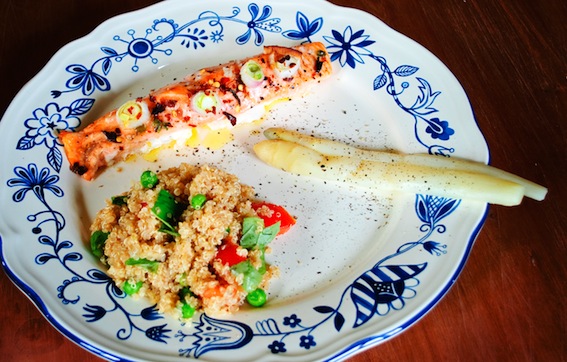
It actually stopped raining for the first time in over three weeks this morning and I was able to walk the (by now totally manic) dog without coming back absolutely soaked to the core. I even caught a glimpse of a rather strange, bright yellow ball of fire in the sky – I wonder what that could have been?
My meteorological ponderings and canine therapy took longer than expected, so I wanted to do something quick for lunch. And this is it. If you use frozen salmon, make sure it’s thoroughly defrosted before you cook it; cooking from frozen causing a thermal shock which tends to make the fish (or meat) tougher. Obviously it’s best if you can get fresh salmon (and preferably Scottish 😉
Ingredients (serves 4)
4 salmon filets
2 spring onions (or shallots)
olive oil
Lee and Perrins or soya sauce
seasoning (salt, pepper, chilli flakes)
1 tsp brown sugar
1 cup of quinoa
1 cup of peas
handful of fresh basil
chopped tomato
chopped garlic
Put the salmon filets in an ovenproof dish, coating fairly generously with olive oil on either side. Rock salt and pepper to taste and then I added some chilli peppers (not for the children though), spring onions and dried seaweed (OK for the children as long as you don’t actually utter the word ‘seaweed’). Also a dash of Lee and Perrins. This should be cooked in a very very hot oven for 12 minutes. I know this sounds OCD, but it really must be 12 minutes; 11 too few, 13 too many!
Use organic quinoa if possible cooked with a handful of peas. Don’t overcook or it will become a slimy mess (losing many valuable nutrients along the way). Once cooked, run under cold water or it will continue to cook, drain thoroughly and then mix with chopped garlic, fresh basil (ripped into small pieces,) and nice juicy chopped tomatoes. Season with rock salt, pepper, balsamic vinegar and olive oil.
I also served it with a few white aspargus, of which we have an absolute glut at the moment (life can be very hard).
-
Chicken in the pot
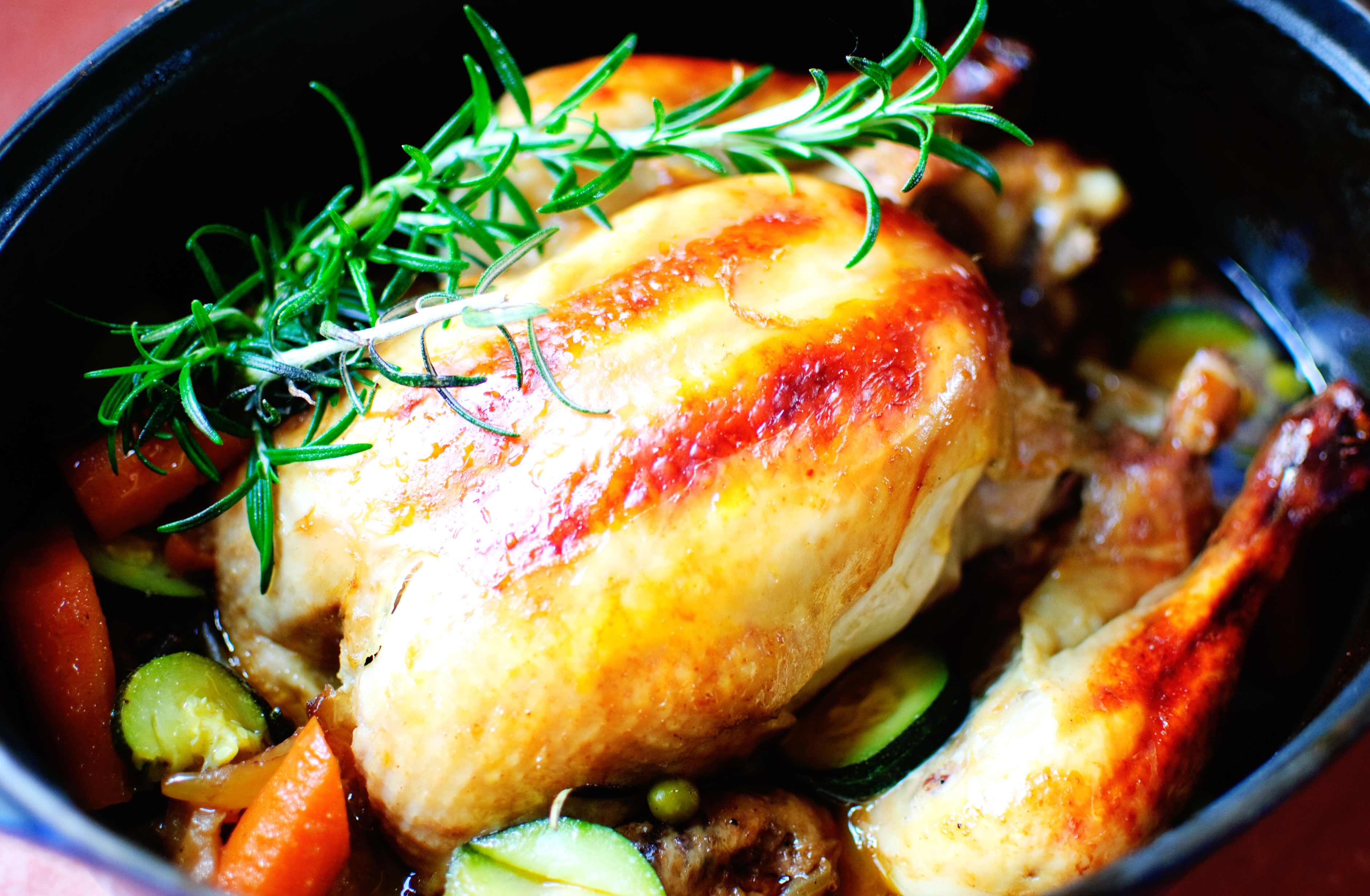
This dish is traditional Sunday fare in Aquitaine. It was made popular by Henri IV who declared his hope to be that France would become peaceful and prosperous enough for every family to be able to enjoy ‘poule au pot’ every Sunday. This is obviously my ‘take’ on the dish; I don’t think that French families had access to Lee and Perrins sauce in Henri IV’s day.
Today is election day. Here’s to hoping that our next president will bear Henri’s good intentions for peace and prosperity in mind…
Ingredients (serves 6)
1 chicken
1 onion
1 leek
3 cloves of garlic
3 medium carrots
1 cup of peas
5 mushrooms (sliced)
1 courgette
rosemary, bayleaf
olive oil
glass of white wine
Lee and Perrins sauce
2 tablespoons of redcurrant jelly
seasoning to taste (sea salt, pepper and paprika)
Lightly brown the onion, garlic and mushrooms in the olive oil in a casserole dish. Add the chicken and brown on both sides. Add a good slug of Lee and Perrins and the redcurrant jelly and continue heating. Add the sliced carrots, rosemary and bayleaf and turn chicken right-side-up. Season generously and add the glass of white wine. If you don’t have any wine open, you can use apple juice for a sweeter taste, or just water with a tiny bit of chicken stock.
Put the lid on the casserole and cook in a medium oven (150°C) for about an hour and a half. You should check half way through that there is still some liquid left in the bottom of the casserole (a couple of centimetres is ideal). If there is too much liquid you could take the lid off for the last 15 minutes. The peas and sliced courgettes should be added about 20 minutes before serving so that they stay firm.
This is lovely served with mashed potato any green vegetable. -
Floating islands
After three years’ pretending that he’s So Not Bothered by storms, our neurotic labrador has suddenly decided that they absolutely terrify him. He’s gone from superior nonchalence to quivering wreck in one furl swoop; no half-measures with Hugo. Which means that when it’s stormy (which is quite often here in the Spring), I gain an appendage of 30 kilos of black fur, which is a bit of a hindrance for moving around the kitchen (and certainly not a good look).
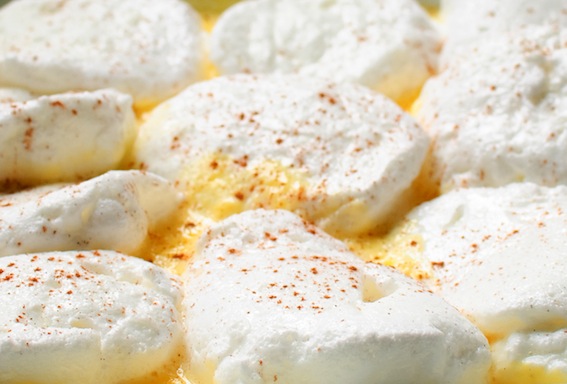
In spite of my appendage (or perhaps thanks to), I somehow managed to make this which is really delicious. The recipe came from my late mother-in-law.
Ingredients (serves about 6, depending on greed)
1 litre of full-fat milk
120g cane sugar
1 vanilla pod
1 tablespoon of cornflour
4 eggs (preferably free-range)
1 tablespoon of rum (optional)
Heat a glass of the milk and sugar mixture in a saucepan until it starts to simmer. Dilute the cornflour in a tiny bit of water and add to the milk and sugar mixture. Separate the eggs and four yolks to the mixture.
Beat the egg whites (adding a pinch of salt) until firm, then separate with a serving spoon and cook in the remaining milk which should be simmering (this should take about two minutes; one minute on each side). Sieve once cooked.
Add the cooking milk to the milk/cornflour/egg mixture with a whisk and bring to the boil until the mixture thickens (a couple of minutes). Add the rum and pour into a bowl and place the cooked egg whites on top. Refrigerate and serve chilled. -
Duck breast
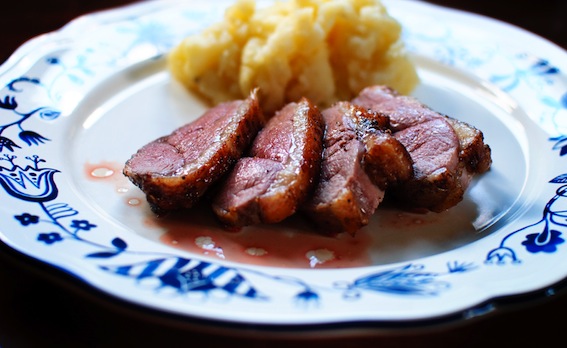
This is a typical Gascon dish, and one that we enjoy quite frequently. In the winter it’s lovely served with potatoes fried in duck fat and green beans. In the summer it’s delicious finely sliced and served lukewarm on a green salad with orange slices and mint. It should not be overcooked – the meat should be pink. The aim of a good magret de canard is a crisp skin on the outside and liberation of all the fat between the skin and the meat (which is why the fat should be drained off several times).
Everyone benefits from this dish; we eat the meat and the dog eats the fat, which is often slung across the table at him (not by me I hasten to add). Not that he actually sits at the table with us, obviously. It’s funny though how his ‘catch on the fly’ reflexes are spot-on when it comes to catching airborne duck fat, far more so than for catching common or garden morsels.
One last thing. Please remember if asking for this in a restaurant in France that it is ‘magret de canard’ and not, as a friend of my once ordered, ‘magret de connard’; the former is duck breast, the latter roughly translated means ‘breast of arsehole’…
Ingredients (serves 4)
2 duck breasts
rock salt, pepper
1 tablespoon of honey
star anise
Preheat the oven to very hot (220°C). Score the duck breasts on the fatty side using a very sharp knife, cutting in a parallel lines. Generously Season both sides of each breast with the rock salt and pepper and then the honey. Put the two breasts together, fat side out. Bind with colourless string. Cook for 15 minutes on one side, remove from oven and drain the fat. Then 15 minutes on the other side, remove and drain. Put back for another 15 minutes or until the skin is golden brown.
Slice into slices of just under a centimetre and serve. -
Ways with asparagus

Asparagus season started here in early April and is set to continue until the end of May. White asparagus is more common in France and I buy ours direct from the farm up the road. They’re so fresh and tender that I don’t even need to cut the ends off.
Asparagus can be roasted with olive oil and rock salt for about 15/20 minutes, steamed, cooked in simmering water (15 minutes) or even microwaved (although I wouldn’t personally recommend this and I hate microwaves and ours ‘mysteriously’ died an undignified death at the rubbish dump).
One of the classic ways to eat asparagus is with a Hollandaise sauce (very topical at the moment!), which is quite tricky to make but very rewarding if you succeed (good luck!)
Asparagus can be grilled with parma ham (or probably Bayonne ham if you live here!) and parmesan, which is a delicious combination. A great favourite in this area is asparagus omelette, which is a mouth-watering combination of corn-fed chicken eggs, butter and tender aspargus tips. Be sure not to overcook the omelette – the inside should still be slightly runny.
Another traditional way to serve them here is ‘au gratin’. Make a well-seasoned béchamel sauce and then fold in the asparagus and if you like, some ham. Cover the top with grated cheese and a dot of butter. Bake in a hot oven (200°C) until the top is crispy and golden. -
Creamy curried pork with apples

My plan had been to cook these pork chops on the open fire, but since I had let the fire go out (there are limits to my multi-tasking talents) and it’s hard to justify rekindling a fire when it’s over 20°C outside, I decided to cut the meat into strips and cook them on the hob.
Ingredients (serves 4)
4 pork chops
1 apple
2 shallots
3 mushrooms
2 cloves of garlic
1 bay leaf
3 tablespoons’ calvados
olive oil
thumb size piece of fresh grated ginger
1 cinnamon stick
salt, pepper, tumeric, curry powder
cashew nuts
100ml pouring cream
Chop the shallots, garlic, mushrooms and apples and fry until golden brown in olive oil. Add the stips of pork and then the grated ginger, cinnamon stick and cashew nuts. Season to taste (I tend to like things hot and spicy). Keep frying until the pork is cooked (roughly five minutes) and then add the calvados and cream. Cook for a further two or three minutes until the cream is bubbling and slightly thickened.
Serve with rice or shredded cabbage. -
Toulouse sausages and Tarbes beans
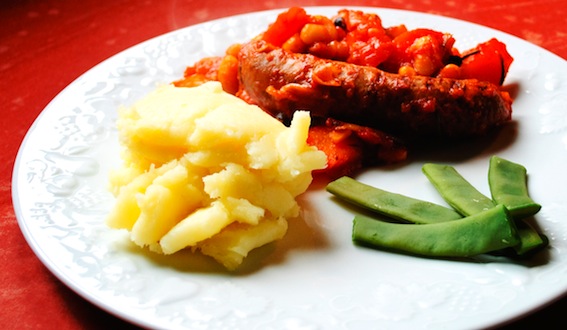
I prepared this today for lunch as our son had a friend to stay and ‘bangers, mash and beans’ is always a great favourite with little boys. The advantage of Toulouse sausages is that they are so substantial and meaty that chewing time is longer than less ‘manly’ sausages. Increased chewing time = longer (blissful) silence at the table! What’s not to like?
Ingredients (serves 4)
4 Toulouse sausages
olive oil
can of peeled tomatos
1 onion
2 cloves of garlic
sprig of rosemary
5 medium-sized mushrooms
250g of Tarbes beans (precooked)
Lee and Perrins sauce
Seasoning (sea salt, pepper, cayenne pepper)
Chop the onions, garlic and slice the mushrooms and add to the olive oil in a casserole dish. Sear the sausages for a few minutes on either side on a griddle if you have one, if not in a frying pan and then add to the casserole dish. Once everything is golden brown, add the tomatoes, beans and the rosemary. Season to taste (salt, pepper, cayenne and Lee and Perrins). Cook for about an hour and a half in a medium oven (150°C), until the tomatoes begin to caramelise.


