-
Curried prawns in agar agar and how to pluck a hen
by Hugo, Canine Correspondent

I’ve had quite a relaxing week because The Noisy One has been away on a sailing trip. I expect he’ll be quite hoarse by the time he gets home from barking orders at adjacent boats (did you like my animal imagery there?). Anyway, it’s nice to have some time off from being shot at and tackled to the ground. There has been one thing that’s been bothering me a bit though: two of the hens are nesting (and very unpleasant they’re being about it too), which leaves one hen wandering around alone looking a bit pathetic; even more so than usual ;-). I’ve been trying to keep her spirits up by grabbing her for a cuddle and an affectionate chew of her wings, but I just get yelled at by old Bossy Boots. Life can be very complicated sometimes *doggie sigh*.
Ingredients (makes 6 mini terrines)
250g frozen prawns
juice of half a lemon
25g butter
1 tablespoon olive oil
150ml fish stock
1 clove garlic, crushed
1 shallot, chopped
1 bay leaf
sea salt and freshly ground black pepper
2 teaspoons curry powder
1 tablespoon mango chutney
4 fresh basil leaves
4g Agar-Agar powder
Place the prawns steeped in lemon juice in a frying pan and add the olive oil and butter. Fry gently, gradually adding all the other ingredients with the exception of the Agar-Agar and basil leaves. Simmer for about 10 minutes, until the prawns are cooked through and the liquid partly evaporated. Once cooked, add the basil, blend briefly in a food processor and set aside. Dissolve the Agar-Agar in a small amount of water and bring to the boil (according to the instructions on the packet). Once boiled, add to the prawn mixture and distribute into moulds (I used silicon muffin moulds). Compact the mixture well. Refrigerate for at least a couple of hours and serve chilled.
Health benefits of agar agar
Agar is a good source of calcium and iron, and is very high in fiber. It is an excellent aid in digestion and weight loss and also carries toxic waste out of the body. Other benefits include its ability to reduce inflammation, calm the liver, and benefit the lungs. -
Cheesy G8 muffins

The G8’s recent mufti extravaganza prompted me to create these American-style savoury muffins as a tribute to Obama, the only leader able to carry off the ‘my tie’s being laundered following a messy run-in with tomato ketchup’ look with any panache. I’m not altogether certain that the main objective of the summit was to evoke a Monty Python sketch, but that, to my considerable amusement, was the result.
Allison Pearson, writing in the Daily Telegraph, summed it up perfectly:‘Let’s be clear. You can wear a suit without a tie, on two conditions. One, the suit needs to be of the highest grade, woven from the chest-hairs of privately educated sheep. And two, you need to be Barack Obama. Otherwise, you end up with the deeply uncomfortable gallery of statesmen who were photographed at Enniskillen, as in a police line-up. David Cameron looked as if he had left his tie in the car; Vladimir Putin looked as if he had left his tightly knotted around the throat of a political opponent; the Japanese prime minister, unhindered by any tie, had had a rush of blood and opted for deck shoes as well, and may have to be dissuaded from wearing a ripped T-shirt and winklepickers next time. François Hollande, as usual, looked like a misplaced maître d’, who needed not just a tie but an apron and a white napkin over his arm to complete the look.’
These are adapted from a Hugh Fearnley-Whittingstall recipe.
Ingredients (makes 12 muffins)
250g German spelt flour
2 teaspoons baking powder
½ teaspoon bicarbonate of soda
Pinch of sea salt
1 teaspoon paprika
1 tablespoon Italian olive oil
2 organic eggs, beaten
80g butter, melted
200ml Russian kefir (or yoghurt)
75g strong English Cheddar, grated
75g French Comté, grated
75g courgettes, peeled and grated
1 teaspoon Worcestershire sauce
1 small onion, peeled and chopped into small pieces
Preheat the oven to 200°C. Fry the onions in olive oil over a gentle heat until golden. In a large bowl, sift together the flour, baking powder, bicarbonate of soda, salt and paprika. In another bowl combine the eggs, butter, kefir and Worcestershire Sauce and stir into the flour mixture until just combined. Last, fold in the onions, courgettes and cheese. Spoon the mixture into a muffin tin (greased if you’re not using a silicon mould) and bake for 18 minutes. -
Spelt kuglof and strange dog diets

My husband ceremoniously whipped up and presented Hugo with an an egg-white omelette yesterday. What was that all about do you think? I mean, just how bizarre is it to make an egg-white omelette for a big black labrador? As if the poor mutt doesn’t have enough issues to last a lifetime. Anyway, in a fit of rebellion I poured cream over his kibbles last night (Hugo’s, not my husband’s); he needs to learn to live a bit.
Kuglof (kouglof, kougelhof, kugelhof, kugelopf, kugelhopf or kouglouf) is typically found in Alsace, Germany, Switzerland and Austria. Traditionally it is baked in an earthenware mould with a central funnel, although there are now silicon or aluminium moulds available.
Ingredients
75g raisins
4 tablespoons rum or kirsch
15g bakers yeast
200ml lukewarm milk
500g spelt flour (or plain if you prefer)
1 teaspoon sea salt
75g cane sugar
2 eggs, beaten
75g butter, softened
75g coconut oil, softened (or just use 150g butter)
20g almond flakes
1 tablespoon icing sugar to decorate
Place the raisins in a small bowl and cover with kirsch or rum. Set aside to soak. Mix the yeast with 100ml milk and a tiny bit of flour and leave to double in volume. Mix the remaining flour, salt, sugar, eggs and milk. Beat or knead for about 15 minutes. Add the butter and coconut oil, mixing well. Next add the yeast and knead or beat until the dough becomes detached from the bowl. Cover with a damp tea towel and leave the rise for an hour in warm place (between 25-30°C). Reduce the dough to original volume by gently tapping. Add the soaked raisins and mix. Butter the mould and evenly distribute the flaked almonds in the bottom. Add the dough and leave to rise until it reaches the edge of the mould. Cook for 45 minutes in an oven preheated to 200°C. Once cooked, remove from the mould and decorate with icing sugar. -
Healthy chocolate chip cookies and mutant mosquitos

Monumental rainfall followed by stifling heat means mosquitos. Of course here, it doesn’t just mean common or garden mosquitos, it means huge, mutant reprobates with an agenda: namely to make me look as if I’m suffering from a very nasty infectious disease. And as if a nasty infectious disease isn’t punishment enough, I’m also covered in bruises from walking around the house in the dark because I’m too scared to put the lights on.
Léo is injured too and has his arm in a sling (something to do with walls, daredevilry and being a ten-year-old boy). Since his skateboarding tricks are somewhat impeded, he decided we should make chocolate chip cookies; I decided that they should be reasonably healthy and this is what we came up with.
Ingredients (makes 25-30 cookies)
125g spelt flour
1 teaspoon baking powder
65g virgin coconut oil
75g cane sugar
40g organic chocolate chips
15g chopped hazelnuts
1 teaspoon vanilla
1 egg, beaten
Sift the flour and baking powder into a bowl and rub in the coconut oil until the mixture is the consistency of breadcrumbs. Stir in the sugar, chocolate chips and nuts. Add the vanilla and egg and mix until the mixture becomes a stiff dough. Knead the mixture on a floured surface and roll into a sausage shape, roughly 5cm thick. Refrigerate for several hours or even overnight.
Preheat the oven to 190°C. Cut the dough into slices of just under a centimetre and arrange, spaced out (the cookies, not you ;-)) on a greased baking sheet. Cook for 12 minutes and leave to cool. -
Spelt brioche and a water-locked house
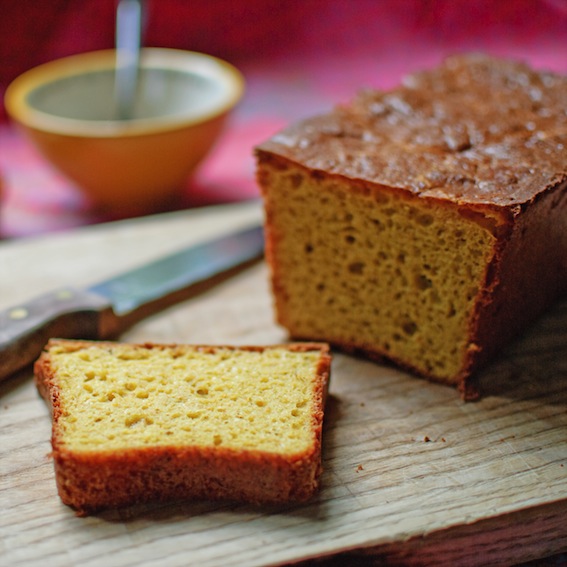
We had almost as much rainfall overnight as we usually have during May and June combined. Here it doesn’t rain, but it pours; the house was surrounded by an impressive moat this morning that I don’t recall being there when we signed on the dotted line. We now also boast a second river, which sounds fine in theory, but is not so practical in reality as we’re not very well-equipped boat-wise. Hugo took one look outside this morning and went back to bed, sighing heavily, the hens are developing webbed feet and learning to swim and I was out early drying off the horses with my hairdryer. All-in-all an appropriate morning for brioche.
Ingredients
300g spelt flour (or plain flour if you prefer)
100g butter, melted
100g coconut oil, melted (you can substitute this for a further 100g of butter)
1 teaspoon sea salt
1½ teaspoons dry bakers’ yeast
2 tablespoons cold water
4 eggs, beaten
40g cane sugar
Dilute the dry yeast in 2 tablespoons’ luke-warm water and set aside for 10 minutes. Mix the flour, yeast, salt, sugar, beaten eggs, melted butter and oil. Either knead by hand or beat in a mixer (better if you’re lazy). The dough must stay elastic in consistency so add a drop more water, if necessary. Leave the dough to rise in the mixing bowl for about an hour at a temperature of between 25-30°C (it should double in volume). Beat and knead the dough and leave to rise for a further hour. Beat and knead again and put the dough in the loaf tin. Leave to rise one last time. Preheat the oven to 200°C and cook for 25 minutes. -
Chickpea flour cauliflower cheese (gf) and the case for the defence
by Hugo, Canine Correspondent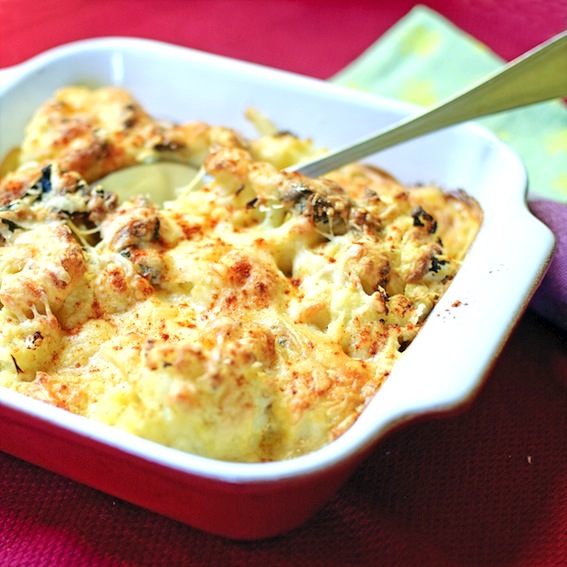
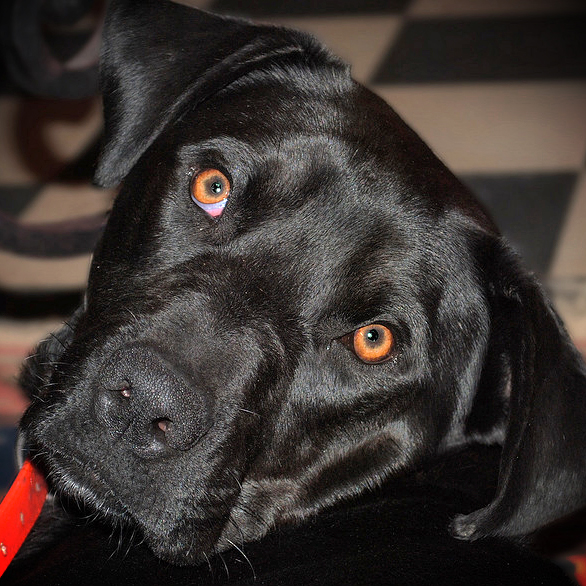
I’ve decided that I’m a dab paw at blogging, so off I go again. I’d like a chance to set the record straight; I felt the last post was rather slanderous (I found that word in the dictionary I got for my birthday). First of all, I do not dribble. And second of all, I only toot the car horn when I feel that The Bossy One has talked to whoever it is she’s talking to for quite long enough and it’s time to get home. She seems to forget that I have things to do: keep the hens in order, bark at the horses if they’re in the wrong field (or for no good reason whatsoever ;-)), check the boundaries for stray deer, wild pigs and badgers, empty the rubbish bin in the kitchen… I could go on – a dog’s work is never done. Especially if he sits in the car all day *sigh*.
Anyway, I think she must have felt a bit guilty for bad-mouthing me because this was produced last night and she let me ‘clean’ the dish. 🙂
Ingredients (serves 4-6)
1 cauliflower
25g butter
2 tablespoons olive oil
60g chickpea flour
sea salt and freshly ground black pepper
½ teaspoon of paprika
1 teaspoon mustard
200ml milk
100ml chicken or vegetable stock
50g comté (or other hard cheese), grated
50g parmesan, grated
Begin by cooking the cauliflower florets in salted boiling water for about 15 minutes. Drain and set aside. Preheat the oven to 180°C.
For the sauce, place the flour, butter, olive oil, seasoning and milk into a saucepan and place over a gentle heat. Whisk until it reaches a gentle simmer. Continue whisking, adding the mustard and then the stock little by little, for just under five minutes. Add half of the cheese and whisk again until it melts. Pour over the cauliflower florets which you will have arranged in a baking dish. Sprinkle the rest of the grated cheese over the top and add a little more paprika. Cook for about 45 minutes. -
Potassium, your invisible friend
An excellent and informative post from Dr Malcolm Kendrick, Author of ‘The Great Cholesterol Con’.
-
Mini salmon terrines and getaway strategies

It’s starting to be tricky to escape in the car alone; Motoring is Hugo’s absolute favourite. He prefers the front seat and I have, in the past, resorted to belting him in rather than take on the chore of coaxing him out of the car. Naturally, he takes it very badly if I kick him out. If, on the other hand, I leave him in the car and need to stop off somewhere, he presses on the horn with his chest if he feels I’ve ‘abandoned’ him for too long. He also dribbles on the seat. So it’s a toss-up between his being put-out and potentially depressed at being ditched, and my being mortally embarrassed by a high-maintenance, disruptive dog and wet front seat. I’m spoilt for choice.
This salmon terrine is an attempt to recreate a dish we had in our hotel in the Pyrenees this winter, as requested by Léo. It is, according to him, ‘quite edible’; Praise indeed. 🙂
Ingredients (makes 6 mini terrines)
2 salmon filets (250g)
juice of half a lemon
25g butter
150ml cream
1 clove garlic, crushed
1 shallot, chopped
½ teaspoon ginger, freshly grated
1 bay leaf
1 tablespoon Pastis
sea salt and freshly ground black pepper
1 teaspoon paprika
4 tablespoons of diced cucumber
4 leaves of fresh mint
2g Agar-Agar powder
Place the salmon filets steeped in lemon juice in a frying pan and add the butter and cream. Bring to a gentle simmer and add all the other ingredients with the exception of the Agar-Agar, cucumber and mint leaves. Simmer for about 10 minutes, until the salmon is cooked through and the liquid partly evaporated. Once cooked, add the mint leaves, blend briefly in a food processor and set aside. Dissolve the Agar-Agar in a small amount of water and bring to the boil (according to the instructions on the packet). Once boiled, mix into the salmon with the diced cucumber and distribute the mixture into moulds (I used silicon muffin moulds). Compact the mixture well. Refrigerate for at least a couple of hours and serve chilled.
-
Canelés de Bordeaux
There is an exquisite patisserie called Pariès in Bayonne, which is the capital of the Basque country in south-western France. They recently produced a book of their recipes, which Idrooled overdiscovered the other day. Bayonne is famous for its chocolate, amongst other things, and was one of the first places in Europe to produce chocolate in the early 17th century. There is always a deliciously rich, chocolate-laden aroma in the streets of the city centre. It’s sometimes worth just strolling around there to get a fix!
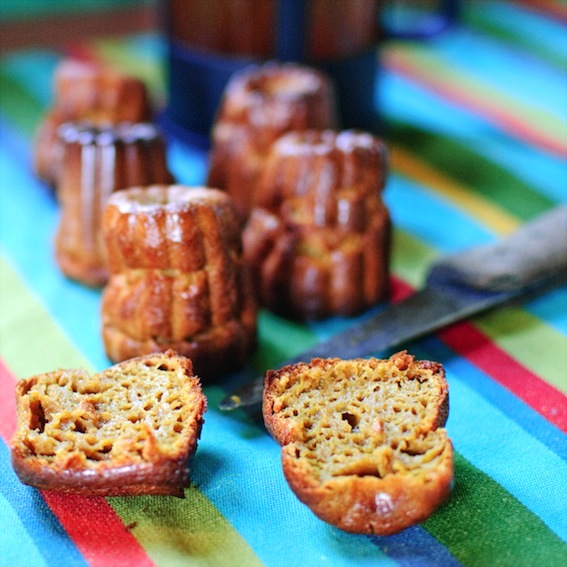
I will be sharing some of the chocolate recipes from this absolute gem of a book, but today I made another regional speciality: canelé [kan-ul-ay]. A canelé (or cannelé) is a small French pastry with a moist custard-like centre and a dark, thick caramelized crust. It is the shape of a striated cylinder approximately 5 cms in height and is a specialty of Bordeaux.
These contain too much sugar for me to claim that they’re positively good for you. Having said that, I made them with cane sugar and spelt flour (of course!) and as they contain rich, ‘real’ ingredients they are most definitely a healthier choice as a treat than anything in packaging! I had to make a second batch to photograph because the first batch disappeared far too quickly; They’re that moreish!
Ingredients (makes about 12)
You will need a special canelé mould to make these. The best are made from copper, although I used silicon.
400ml milk
20g salted butter
2 egg yolks
1 egg
140g sugar (I used cane sugar)
120g flour (I used spelt flour)
1 vanilla pod
10cl rum
A little extra butter for greasing the moulds
Beat the egg yolks, egg and sugar in a mixing bowl. Add the flour and vanilla and continue to mix gently. Bring the milk to the boil in a saucepan, remove from the heat and immediately add the butter. When the milk has cooled to lukewarm, add to the other ingredients in the mixing bowl. Mix well. Leave the mixture to rest in the fridge for at least 24 hours, 48 hours if possible. This is important as the mixture must be as ‘airless’ as possible or it will rise during cooking. Also for this reason, it must always be mixed gently, taking care not to add too much air.
To cook the canelés, preheat the oven to 220°C. Remove the mixture from the fridge and very gently stir the (what will now be separated) batter until homogenous. Add the rum at this stage too. Fill the buttered moulds about 7/8 full. Cook for 10 minutes at 220°C and then turn the oven down to 190°C. Cook for a further 40 minutes. Leave to cool before eating. -
Spelt flour pizza base and stark-raving lunatics

The moon is full tonight. If you have animals anything like ours and had intended sleeping through the night, a word of warning: it ain’t gonna happen. 🙂
The horses will spend all night ‘partying’ (galloping from one end of the field to the other, whinnying to anyone who will listen and ‘fighting’ on their hind legs). They’ll be exhausted by the morning (thank God) and spend the whole day sleeping it off.
The hens are, at his very moment, on the terrace table doing a sort of flamboyant chicken tango, which involves much flapping, flirting, fluttering and hissing. In fact it’s so flamboyant that one of them fell off the table *snigger*.
Which bring me to Hugo. Being a bit of a primo uomo, Hugo makes sure that his behaviour trumps that of the other animals. Having pulled his chair away from the wall with his teeth, he has created a little game for himself. He charges the chair, throwing himself into it heavily to see how far it will ‘skid’ across the tiles. After several good ‘skids’, he runs dementedly around the house, blanket over head, seeking praise for his talent. Just shoot me now.
There are times when only pizza will do. This base, being made from spelt flour, is light, tasty, nutritious and more easily digested than a regular pizza base.
Ingredients (6 slices)
250g spelt flour
½ teaspoon salt
1 tablespoon olive oil
1 sachet bakers yeast (dilute in lukewarm water 10 minutes before use)
pinch of bicarbonate of soda
Sift the flour and salt into a mixing bowl. Beat or knead for about 6 minutes, progressively adding a tiny bit of water, teaspoon by teaspoon. Be careful not to add too much water or the dough will become sticky. Leave the dough to rise at a temperature of 25°C to 35°C for an hour, then re-mix (or re-knead). Put it in the fridge for an about an hour and then roll out ready to apply the topping. I used fresh tomato sauce, black olives, chorizo, anchovies and parmesan. Cook in a preheated oven (200°C) for 15-20 minutes.
