-
Cabbage and blue cheese mini quiches and human straitjackets
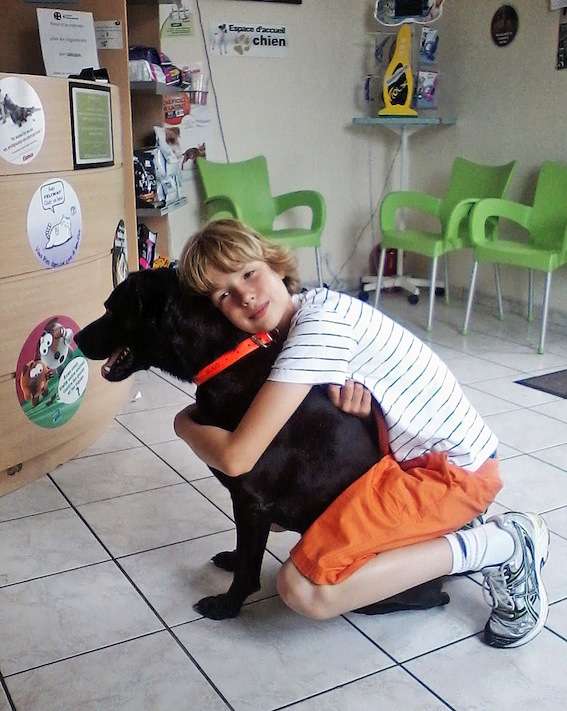
Unsurprisingly, Hugo’s annual visit to the vet is not something I particularly look forward to. I wouldn’t wish to shame my faithful friend (especially in view of our slightly volatile working relationship), but I suspect the vet might share my feelings. In a nutshell (nut being the operative word), during his last visit, he took out a cat, threw himself at a plasterboard wall leaving a significant hole and broke a table leg. He also refused to lie on the floor, preferring instead to avail himself of the chairs. I can’t even blame his appalling behaviour on white coat hypertension – the vet is always rewarded with huge, slobbery kisses for her courageous attempts to calm and vaccinate him (from Hugo, not me). I think it’s a simple case of overexcitement at the idea of being in an enclosed space with so much potential chase fodder. This time, as it was impossible to hold him on his lead (his brute force would be a match for a prize bull), bad mother and even worse pet owner that I am, I resorted to using Léo as a human straitjacket. It wasn’t ideal (I had to haul them both out from under the reception desk), but at least there was no structural damage to the surgery, which can only be a good thing. I do realise that I’m setting the bar pretty low in terms of canine obedience, but everyone has to start somewhere. In our case that appears to be rock bottom.
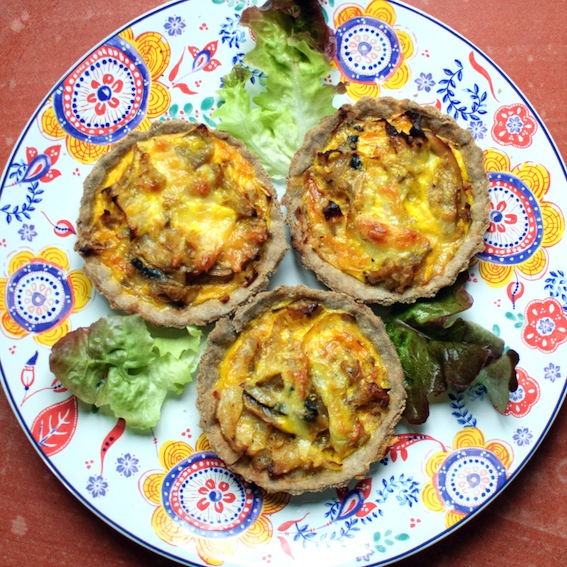
White cabbage and blue cheese complement each other beautifully. Cabbage has the highest amount of some of the most powerful antioxidants found in cruciferous vegetables, which stimulate detoxifying enzymes. It is rich in vitamin K, which is important for bone metabolism and for preventing neuronal damage in the brain. Cabbage is also an excellent source of fibre, vitamin C and the B vitamins and also provides iron, manganese, magnesium, phosphorus, calcium and potassium.
Ingredients (serves 6-8)
Pastry:
100g spelt flour
80g buckwheat flour
60g butter
30g virgin coconut oil
Roughly 6 tablespoons of cold water
Filling:
250g washed and shredded white cabbage
1 chicken or vegetable stock cube
2 shallots, sliced
Sea salt and freshly ground black pepper
1/2 teaspoon paprika
1 egg
150 ml double cream
100mg blue cheese (I used Roquefort), crumbled
To make the pastry, begin by cutting the butter and coconut oil into small cubes. Add to the flours in a mixing bowl and add a pinch of sea salt. Blend by hand until the mixture becomes crumbly. Add the cold water, mixing rapidly with a spoon. Remove the mixture from the bowl onto a lightly floured surface. Knead until you obtain a ball of pastry (if the mixture isn’t ‘sticky’ enough to form a ball, you may need a drop more water). Wrap in a clean cotton tea towel and leave to ‘rest’ in the fridge for about two hours. This relaxes the dough and makes it easier to use.
Preheat the oven to 180°C. Roll out the pastry on a clean, lightly floured surface and fill the tart tin or tins. As this pastry contains buckwheat flour, which contains no gluten, it will be quite fragile. You’ll find that you have to treat it delicately and possibly fill in the cracks with remaining bits of pastry by pressing gently. I use individual tart tins. Precook the pastry for 12 minutes.
For the filling, cook the shredded cabbage for about 15 minutes in boiling water, to which you have added the stock cube. Once cooked, drain well and set aside. Break the egg into a small bowl and add the cream and seasoning (salt, pepper, paprika). Beat well to form a homogenous mixture. Assemble the tarts by filling about ¾ full with cabbage, covering with crumbled blue cheese and then pouring the egg/cream mixture over the top. Cook at 180°C for 18 minutes. -
Writing Process Blog Tour
I would like to thank Suzanne, creator of the luscious blog, A pug in the kitchen, for asking me to contribute to this tour. Suzanne blogs, amongst other things, recipes passed on from her Italian mother; traditional Italian cooking at its most mouth-watering. Passionate about baking in particular, she is also a developer for Food 52. She writes from her kitchen in Brooklyn, accompanied by her two gorgeous pugs, Izzy and Nando. One of my favourite recipes is her triple chocolate cake which is just pure decadence to be enjoyed with moderation as it could become dangerously addictive!
Other commitments mean that I’m delegating the rest of this post to my ‘pug’, Hugo.
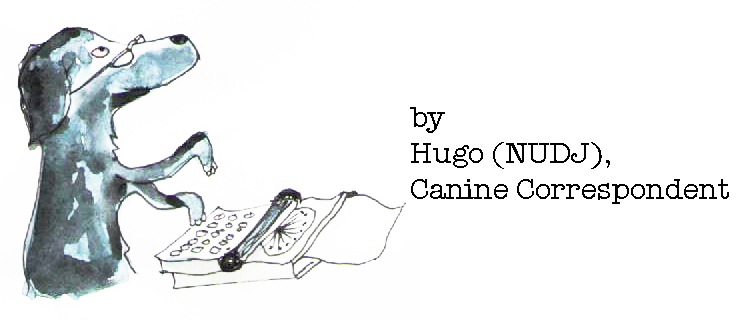
As you can see, Bossy has relegated this post to me. From what I can see, she’s not too busy with ‘other commitments’ at all – she’s just too busy being bossy (did you like the alliteration? I’m still learning about poetry.) Anyway, I’m always happy to get my paws on the computer, so I’m not going to complain to my union this time. I like Mrs Pug’s blog very much because she cooks real food with proper dog-friendly ingredients. Bossy has a tendancy to use strange ingredients that get stuck in your teeth. (Chia seeds for example. What are they and why do we need to be bothered by them?). I’m rather jealous of Izzy and Nando because Mrs Pug cooks for them every day and I just get the family’s leftovers *tragic doggie sigh*. They live in a very big city – New Yorkie I think. I suppose when they chase deer and rabbits they have to be careful of all the cars. Here are the questions that Bossy had to answer. I think that my answers (in italics) are closer to the truth than hers.
1) What are you working on?
(Hopefully she’s working on being less bossy and organised enough to cook for me every day.)
Bossy: I work on far too many projects at any given time for them to come to fruition. I suppose this means that I should probably work on being more focused.
2) How does my work differ from others of its genre?
(Well for a start she is lucky enough to live with an erudite and exceedingly good-natured dog who does most of her work for her.)
Bossy: Although I am absolutely passionate about healthy eating, I hope that I manage to impart my knowledge and ideas without being too evangelical. I believe that it’s up to each individual to take responsibility for their own well-being. I am a also a great believer in ‘all things in moderation’, which is why I’m not vegetarian.
3) Why do I write what I do?
(Because despite what she says, her bossiness gets the better of her and she thinks that everyone should cook as she does.)
Bossy: See above (mine, not Hugo’s. 😉 )
4) How does your writing process work?
(I can’t wait to see this! *sarcastic doggie snigger*. I have never seen such a chaotic ‘writing process’. I’m far more methodical.)
Bossy: I think that in my case, the word ‘process’ is probably rather inappropriate! How I write is probably better described as a profusion of chaotic thoughts that somehow end up either on paper or on a computer at some point, more or less coherently. I am a big believer in ‘a sound mind in a sound body’ and my best ideas come to me when I’m on the move, particularly walking. I always walk with a little notebook and pen and scribble ideas down between strident reprimands to leave the poor deer and bunny rabbits alone.
Bossy asked me to invite a blogger to participate in this tour and I have chosen the delightful blog 10 legs in the kitchen. At first I couldn’t work out who the ten legs belonged to until I realised that it was two human legs and eight doggie legs. I don’t even like to think how many legs there are in our kitchen sometimes, particularly when the chickens invade. Stacey and sometimes her dogs, Ginger and Buddy, write amusingly about their love for both food and life in general and I’m a big fan. -
When life gives you lemons…
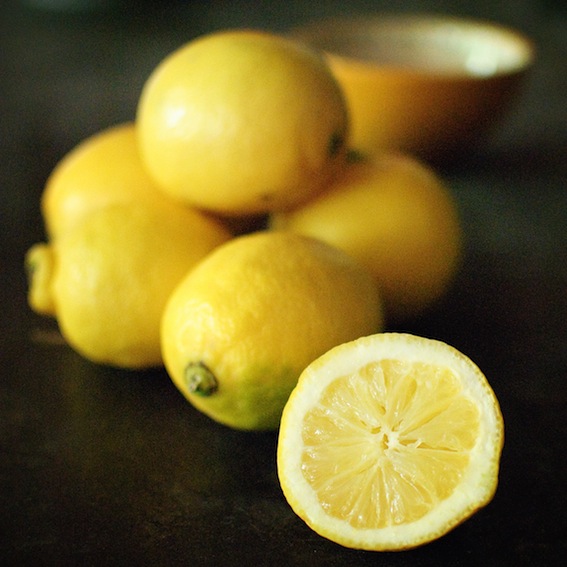
…hoard them! Possibly the most versatile ingredient in the kitchen, the virtues of the lemon extend beyond culinary use. The Ancient Egyptians believed that eating lemons and drinking lemon juice was an effective protection against a whole range of poisons.
I use lemons on a daily basis and always have at least half a dozen to hand. I’m a bit of a lemon fiend. Unsurprisingly, neither Hugo nor the hens are fans and make a big show of their distaste with comical grimaces and much foot-stamping. I have actually seen Hugo growl menacingly at a stray lemon slice in his bowl.
Although acid in taste, lemon juice has an extremely alkalising effect on the body. Rich in vitamin C, it also contains calcium, magnesium, potassium, phosphorus, iron, beta-carotenes, vitamin B5 and soluble fibre such as pectin. It has an abundance of flavonoids which, working synergistically with vitamins, have a powerful antioxidant effect. The main flavonoids to be found in lemons are hesperdin, rutin and quercetin. These are extremely beneficial to the blood vessels and have an anti-allergy action.
Lemon juice will even decalcify your cookware and work as an insect-repellant! Lemons have a powerful antibacterial, antiviral and anti-inflammatory effect and also increase bile secretion. They help to drain and detoxify the liver and kidneys and cleanse the whole body. I think you’ll quickly come to appreciate the value in drinking the juice of a freshly-squeezed lemon first thing in the morning.
Squeezing lemon into your food lowers the overall glycemic index of the meal. It is a significant digestive aid – citric acid stimulates the secretion of gastric enzymes. In cases of over-indulgence and even food-poisoning its alkalising, antibacterial powers are of great help.
From acne and allergies to intestinal worms and verrucas, the not-so-humble lemon has a multitude of medicinal uses, but it is in the kitchen that the lemon really comes into its own. It may be used in the preparation of sweet or savoury, cooked or raw and hot or cold dishes. Use it in salad dressings as a delicious and healthy alternative to vinegar and in marinades for meat or fish.
Gremolata, an Italian creation, is simply a mixture of equal parts lemon zest, parsley and garlic. It is a tangy, versatile topping that can be added to just about any savoury dish to enhance its flavour. Try selling that to your dog.
<a href = “http://www.naturalnews.com/Infographic-15-Reasons-You-Should-be-Drinking-Lemon-Water-Every-Morning.html”>15 Reasons You Should be Drinking Lemon Water Every Morning</a> -
Coffee walnut muffins and unusual best friends

My best friend is a hen. Our friendship is based on mutual compassion – we are both victims of misunderstanding. The other day I was given some chicken bones to eat and, because I’m a generous sort of dog, I invited BHF to share them. I made it plain to the other hens that she was the only one invited; they tend towards vulgar, thuggish behaviour and gate-crashing. Luckily, I can be very intimidating *grrrr* , so they quickly got the message. I’m not sure that BHF knew she was cannibalising, but I didn’t explain because I know she has enough problems and a rather sensitive nature. Sometimes, when Bossy isn’t looking, I invite her into the house to eat from my food bowl. I’m working on a plan to sneak her in to watch television with me. My favourite programme is Scooby Doo and I think she’d like it too (did you like the internal rhyme? I’m learning about poetry at the moment). I think you’d agree that it would be worth it just to see Bossy in full meltdown mode *wicked doggy cackle*.

Walnuts are a rich source of omega 3 fatty acid (just 25g a day covers most of your needs). They are also very rich in vitamin E and other antioxidants, as well as providing a healthy supply of B-complex vitamins. Added to this, they contain numerous minerals: manganese, copper, potassium, calcium, iron, magnesium, zinc, and selenium.Ingredients (makes 12)
175g spelt flour
100g rye flour
Pinch of sea salt
I heaped tablespoon instant coffee
2 teaspoons baking powder
1 teaspoon bicarbonate of soda
1 teaspoon ginger, powder or freshly grated
3 eggs
250ml coconut milk
4 tablespoons honey
60g chopped walnuts
150g organic virgin coconut oil, melted
Preheat the oven to 180°C. Prepare and grease two muffin tins with butter or coconut oil. Sift the flours, salt, coffee powder, baking powder, bicarbonate of soda and ginger into a large mixing bowl and set aside. In a separate bowl, beat the eggs and then add the coconut milk, honey, walnuts and melted coconut oil, stirring constantly. Combine the two mixtures well. Fill the muffin tins and bake for about 18 minutes.
Delicious served hot or cold as a dessert with Greek yoghurt or ice-cream, or alone with a cup of coffee.
-
The perfect chip and a proxy papa
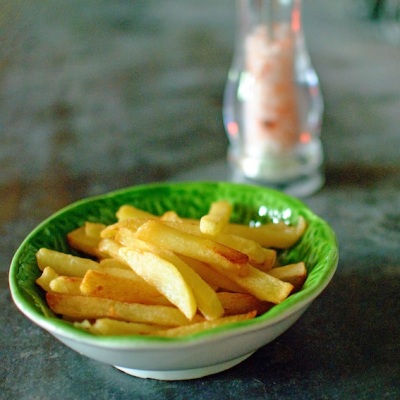
As the idea of me in charge of a vat of boiling duck fat is too harrowing to contemplate, my husband makes the chips in our house. I’m happy to report that my competence does however run to eating them. My husband is away for a few days this week and, last night, Hugo pussyfooted (sorry Hugo – I know that’s not very flattering) upstairs to Léo’s room to dispense a big slobbery goodnight kiss. He has never done this before and probably won’t do it again as, having woken Léo up, he got very short shrift (there was a burst of shouting and Hugo reappeared downstairs looking decidedly dejected, his tail between his legs). I realised that he obviously considers himself to be a stand-in papa, so now I’m wondering if he could bring the wood in for the hot-water boiler, take out the dustbins and then make me a big bowl of chips…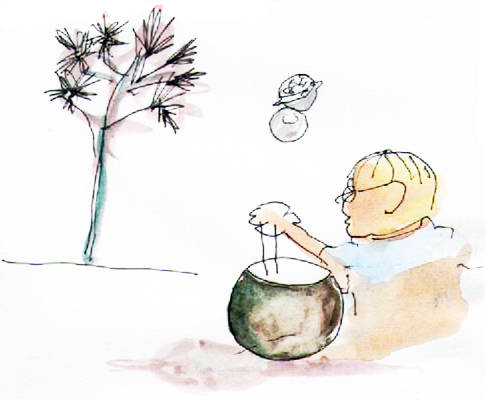
Chips, or French fries, cooked in duck fat are a speciality of Southwestern France. Duck fat is high in monounsaturated fats, which make up 50 percent of its total fat content, with saturated fat making up just 14 percent (much less than butter). Most of that fat is linoleic acid, an essential fatty acid that helps maintain healthy cells, muscles and nervous system. It also boosts calcium absorption and aids in kidney function. From a nutritional point of view, duck fat is comparable to olive oil.
Ingredients (serves 6)
2 kg floury potatoes
2 litres duck or goose fat
Sea salt
Peel the potatoes and cut into medium-sized chips (roughly 6cm long, 4mm thick). Rince and dry in a clean tea towel. Place the fat in a deep frying or chip pan and heat to 150°C. Plunge half of the potatoes into the hot fat for four minutes, remove, drain and set aside. Repeat with the second half. Then recook the first batch for a further four minutes until golden brown. Remove, drain well, season and serve. Repeat with the second half.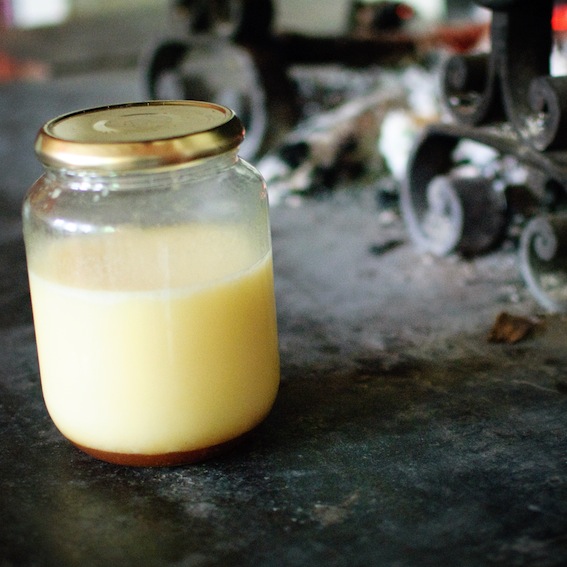
-
Pea and mint soup and Hugo’s new byline

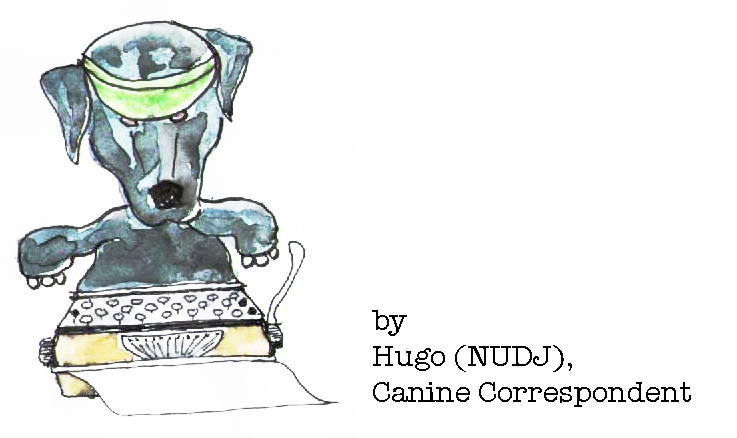
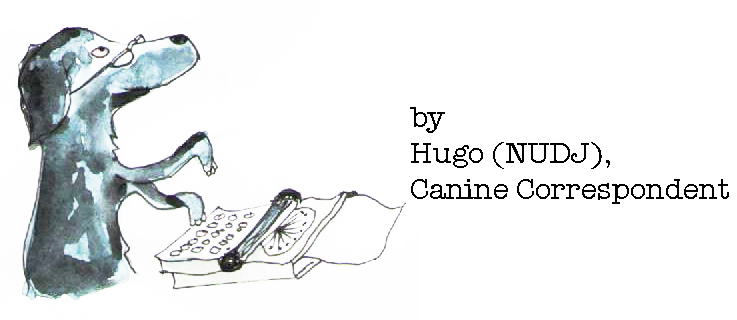
I recently joined the NUDJ (National Union of Dog Journalists) because Bossy can be inclined to take advantage of my good nature. I also decided that I needed a proper byline and my favourite artist submitted a few pwoofs that you can see above and below. I quite like them, although I do wonder whether they properly portray the fact that I am a sophisticated dog of great intellectual gravitas… I would appreciate your opinions.
I’ve been rushed off my paws even more than usual this week; we are in the throes of a baby deer boom. These baby deer have no sense of territory or propriety, which is quite exhausting. And as if this isn’t taxing enough, a family of ducks has moved in without so much as a by-your-leave. They quack very loudly all night and stop me from sleeping. As I work until at least midnight every night, I need all the rest I can get *bone-tired doggie sigh*. When I get time, I shall write to my union about all this noise and overtime.
To be honest, this pea soup is as dull as ditchwater. I’ve never been keen on green-coloured food because, in my world, green means that it’s gone bad. Still, they all seemed to like it, although the Noisy One appears to share my suspicion of anything green.
I’m sorry this soup doesn’t meet with your approval Hugo, although, as this is a healthy eating blog, you might want to dilute your opinion on green things a little bit for next time? I thought it was a particularly delicious Spring soup and will certainly make it again. Peas are sometimes referred to as ‘nature’s multivitamin’, as they contain no fewer than eight vitamins and seven minerals. They are also a good source of fibre and protein and lower the overall glycemic index of any dish to which they are added.
This soup is adapted from a recipe in Anthony Worrall Thompson’s excellent book, ‘GI Diet’.
Ingredients (serves 4 – 6)
10g salted butter
1 tablespoon olive oil
1 onion, peeled and chopped
2 leeks, washed and chopped
1 garlic clove, finely chopped
275g peas, fresh or frozen
1 large courgette, washed and chopped
1 litre chicken or vegetable stock
Sea salt and freshly ground black pepper
1 teaspoon paprika
1 tablespoon fresh mint, finely chopped
Melt the butter in a large saucepan with the olive oil. Add the onion, leeks and garlic and gently soften. Add the peas, courgette and stock and bring to the boil. Add the seasoning and cook until the peas and courgette are tender (about 20 minutes). Add the mint and purée until smooth. -
Courgette, cheese and chickpea cake (gf)
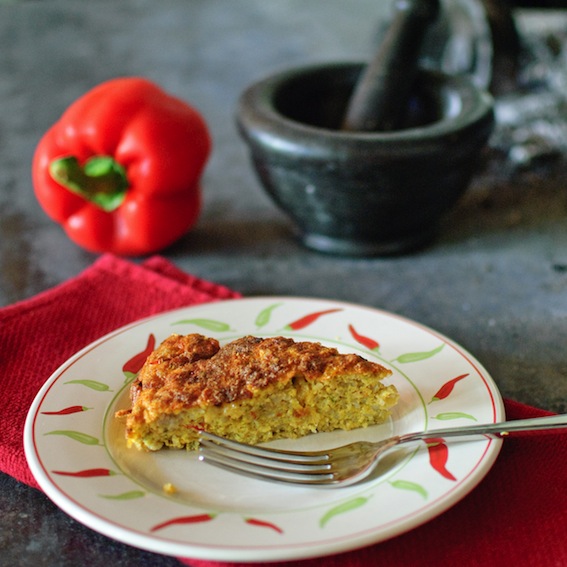
As a follow-on to my previous recipe, I thought I would try a savoury version of the chickpea cake. The result was a protein-rich cross between a paschtida and a savoury flan or cake. In any case, it was very tasty and would make an ideal accompaniment (we ate it with spicy sausages), or could be served on its own with a green salad. This recipe is particularly for Jenna, who is currently in need of quick and easy-to-make gluten-free sustenance.Ingredients (serves 6)
300g chickpeas (garbanzo beans), pre-cooked and rinsed (you can use tinned)
4 eggs, beaten
1 courgette, peeled and finely chopped
½ red pepper, washed and sliced
1 shallot or small onion, peeled and sliced
1 teaspoon bicarbonate of soda
sea salt and freshly-ground black pepper
2 teaspoons paprika
150g hard cheese (I used Comté), grated
Preheat the oven to 160°C. Grease and prepare a medium-sized cake tin, round or square. Pulse the chickpeas in a food processor until they reach a paste-like consistency and then mix in the other ingredients, except the cheese, one at a time, continuing to pulse. Add the cheese last and mix in by hand. Pour the mixture into the cake tin and bake for an hour (a fork inserted into the centre should come out clean). May be served hot or cold.
-
Apple chickpea cake (gf) and competitive shoppers

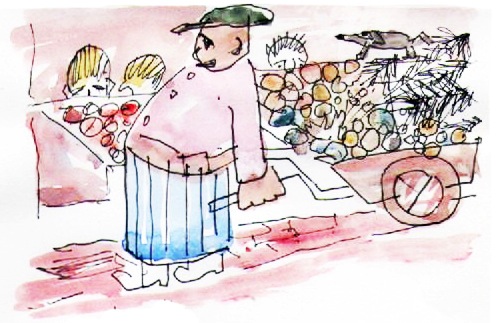
Yesterday was one of the warmest days of the year so far and, in the afternoon, I went on an ice-cream dash to our local supermarket. I’ve never thought of myself as being the least bit competitive, but I’m now wondering if I shouldn’t reconsider following a rather random conversation with another shopper at the checkout:
Random Monsieur: ‘I’ve got two tubs of ice-cream’
Me: ‘I’ve got three’
RM: ‘I’m on a motorbike’
Me: ‘I’m in a car’
RM: ‘I haven’t got a freezer bag’
Just when I was about to boast that I, Miss Organised, did have one, I realised that he was actually angling to jump the queue in front of me. I was rather disappointed because I was beginning to quite enjoy the harmless one-upmanship; It certainly beat thinking horribly uncharitable thoughts about the basket contents of my fellow shoppers, which seems to be my mind’s default activity while waiting in line.
I’m quite addicted to this cake. It couldn’t be simpler and it’s spicy and satisfying, as well as being incredibly healthy. Chickpeas are a rich, tasty and versatile source of amino acids, fibre, manganese, iron, zinc and folates.
Ingredients (serves 8-10)
300g chickpeas (garbanzo beans), pre-cooked and rinsed (you can use tinned)
3 eggs, beaten
4 tablespoons honey (preferably raw)
2 apples, peeled and finely chopped
1 teaspoon bicarbonate of soda
2 teaspoons garam masala spice (or other mixed spice to taste)
100g raisins (pre-cooked in a tablespoon of rum for about 10 minutes)
Preheat the oven to 150°C. Grease and prepare a medium-sized cake tin, round or square. Pulse the chickpeas in a food processor until they reach a paste-like consistency and then mix in the other ingredients, except the raisins, one at a time, continuing to pulse. Add the raisins last and mix by hand. Pour the mixture into the cake tin and bake for between 50 minutes and an hour (a fork inserted into the centre should come out clean). Best served cold.
-
Spelt pilaf and painful toes

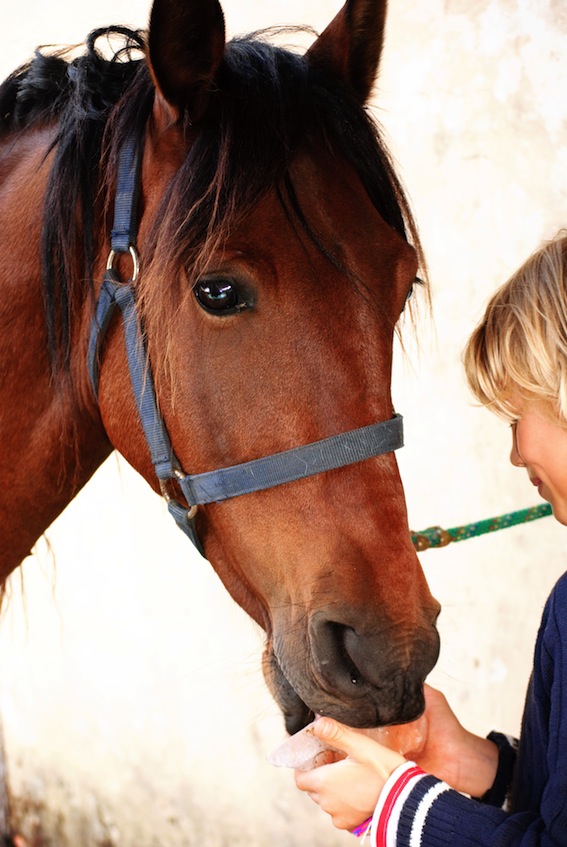
Yesterday, when Castaño, our Exceedingly Naughty Horse, stood heavily on my little toe, I thought my husband’s reaction, ‘don’t worry, it can’t possibly be broken – he’s not very heavy’ (translated: ‘stop moaning and get over it’), could have been a little more sympathetic. I don’t know what his point of reference is, but half a ton of gyrating horse on my little toe certainly felt heavy to me.
Today, while treating our mare’s foot (she managed to stand on the only piece of stray metal within a ten kilometre radius), Luc had his toe stamped on. Castaño, in full-blown ‘joys of Spring’ mode, saw fit to bite the mare’s rear end while she was tied up and, in reaction to the whippersnapper’s blatant audacity, she lashed out behind and stood on Luc’s toe in front. When he yelled at me to get my ‘damned Iberian hooligan’ out of the way, my innate sense of decorum prevented me from saying: ‘it can’t have hurt that much, she’s not very heavy’. Or it almost did anyway. 😉
Spelt grain has a robust, slightly nutty flavour and is high in fibre, B vitamins and minerals. It also contains all nine amino acids. Another considerable benefit of spelt is that it is less likely to cause allergy or intolerance than wheat.
Ingredients (serves 4)
1 tablespoon olive oil
2 shallots, peeled and chopped
2 cloves of garlic, peeled and chopped
200g spelt grain
1 tomato, peeled and cubed
sea salt and freshly ground black pepper
I teaspoon curry powder
750ml chicken or vegetable stock
20g cashew nuts
fresh parsley or basil
Gently fry the shallots and garlic in olive oil in a large frying pan until softened. Add the spelt grain and continue to fry for a few minutes, mixing well so that the grain is covered in olive oil. Add the tomato, stock and seasoning, again mixing well. Leave to simmer for about 30 minutes until the spelt is cooked, stirring from time to time to prevent sticking. Stir in the cashew nuts a few minutes before the end of cooking time and add the parsley or basil to garnish before serving. -
Cheesy cornbread and downwardly mobile dogs

by Hugo,
Canine Correspondent
I’ve been chewing something over for a while now: Why are humans the only race that don’t automatically stretch when they get up? Dogs stretch, horses stretch, cats stretch and even hens who, let’s face it, aren’t the brightest, stretch. Humans like to think they rule the roost, but they’re not always very clever when it comes to basic body-maintenance. Bossy often complains (loudly and at length) about her hurt back and she sometimes goes to the bone doctor. What a lovely job that must be, specialising in bones. I must look into that – I’m sure it would be a good job for me.
Bossy has also taken to lying on a soft blue mat (which makes very satisfactory chewing material) and bending her body into most unhuman positions; she looks a bit silly actually. Apparently it’s called yoga. At first I thought it was just a phrase, but she does it quite regularly. When I have time, I show her how it should be done properly. Usually the Tall One or the Noisy One interrupts to try to talk to her and they get very short shrift indeed. I like to lie on the soft blue mat with her, but she doesn’t seem to like that either. All in all, she’s not very easy to please *desolate doggie sigh*.

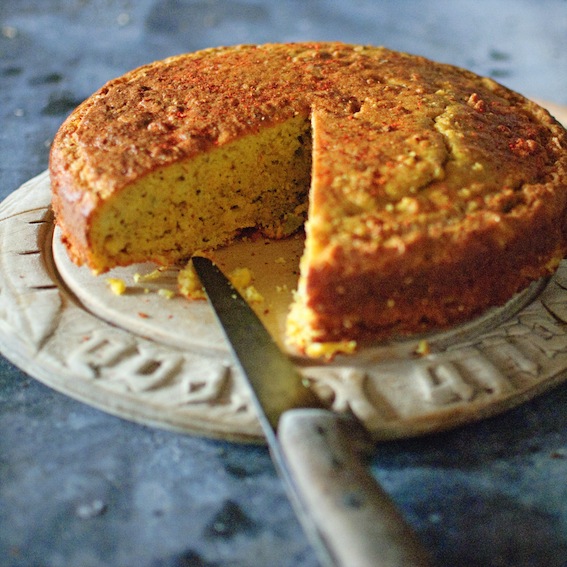
Thank you Hugo, not only for writing today’s blog, but also for the invaluable ‘tips’. This cornbread is based on a Jamie Oliver recipe.
Ingredients (serves 10)
60g butter
2 onions, peeled and thinly sliced
1 small tin of sweetcorn, drained and rinsed
4 large free-range eggs, beaten
325g polenta (or cornmeal)
250ml full-fat milk
1 teaspoon baking powder
6 tablespoons spelt flour
sea salt and freshly-ground black pepper
1 teaspoon paprika
140g hard cheese (I used Cheddar and Parmesan), grated
Preheat the oven to 200°C and grease a 22cm cake tin with olive oil. Gently fry the onions in melted butter for about 15 minutes until golden and sticky. Add the sweetcorn and cook for a further five minutes. Remove from heat and set aside. Mix the eggs, polenta, milk, baking powder, flour and seasoning in a bowl. Add most of the grated cheese and mix well. Stir in the onion and corn. Pour the mixture into the cake tin. Bake for 35 minutes, remove from the oven and sprinkle the remaining grated cheese on top and return to the oven for ten minutes. Delicious served still warm from the oven or cold.
