-
Mussels ‘marinières’ and a Christmas present from Java


Java and I were out on a little jaunt this weekend when Java found a dead wood pigeon. To be honest, I’m surprised she even saw it because I don’t think that her eyesight is quite what it might be; she often mistakes objects and also does this funny cross-eyed thing. Being a perfect gentledog, I offered to carry it home for her, but she was quite stubborn in her desire to hang on to it, even though she had to stop every few metres because it was almost as big as her. When we finally got back home, which took a while because Java has neither my staying power nor my common sense when it comes to carrying things, Bossy took one look and shrieked. What is with Bossy and her shrill screams when we give her presents? And no, there won’t be a recipe for wood pigeon to follow because Bossy and her delicate constitution insisted that we give it to the neighbour, saying she wanted nothing to do with plucking pigeons. As for Java, she was spitting out feathers all evening in a most unladylike way. I think next time she’ll let me take care of the transport.

I don’t like mussels much, except obviously my own masculine dog ones. Java seems quite keen to chew the shells though – maybe she’s teething.
Mussels are surprisingly good for you. Not only are they a high quality complete protein, they are also a rich source of vitamin B12, manganese, iron, iodine and vitamin C.
Ingredients (serves 4)
2 kg fresh mussels
30g butter
1 tablespoon olive oil
2 shallots, finely chopped
2 cloves of garlic, crushed
4 sprigs fresh thyme
1 tablespoon fresh parsley, chopped
Sea salt and freshly ground black pepper
150ml dry white wine (Muscadet is excellent)
Wash the mussels in cold running water making sure to remove any grit or sand. Discard any that float or any that are already open. Heat the butter and oil in a large saucepan over a low heat. Add the shallots and garlic and cook for a few minutes until softened. Add the mussels and coat well with the melted butter, oil and shallots. Add the herbs and seasoning and then the wine. Bring to a simmer and cook for about five minutes until the mussels have opened. Eat immediately, preferably with French fries cooked in duck fat. -
Lamb shanks braised in red wine and uncharitable planetary alignments

In true French style, I blame my mortifying behaviour yesterday on a very unfavourable planetary alignment. Within the space of just a few hours, I repeatedly proved to be a source of acute embarrassment to my long-suffering son, Léo. We went to a computer shop where I ‘asked inappropriate questions’ that made it look as if ‘I didn’t know what I was talking about’. Nothing new there then. In a rush to drop him off at tennis training (the condescension was wearing thin), I apparently did a ‘very illegal U-turn in front of a policeman without my seatbelt on’. The policeman was very indulgent and graciously laughed it off. The son didn’t; I got chapter and verse until the tennis club, where I was happy to launch into conversation with the team coach, only to establish that ‘I don’t possess the competence necessary to read the dates correctly on a tournament schedule’ (in my defense, it was extremely ambiguous). Wanting to save the best for last, I got up to leave, congratulating myself on having found a shortcut out of the new indoor courts. Only it turned out that my shortcut was more of a short circuit, because it set off the (immoderately noisy) alarm system in front of 40 odd people (obviously meaning about 40 people, not 40 strange people because that would be the pot calling the kettle black). The alarm that is directly linked to the police station. I wonder if the policeman was as understanding as he had been about the U-turn. I’m afraid I didn’t hang around to find out…
This is a simple but delightfully warming recipe for autumn/winter. It is adapted from the ‘French Brasserie Cookbook’ by Daniel Galmiche, which is full of fairly straightforward, typically French homestyle recipes.
Ingredients (serves 4-6)
4 lamb shanks
2 tablespoons olive oil
1 onion, chopped
2 shallots, chopped
4 cloves of garlic, chopped
1 fennel bulb, chopped
2 carrots, peeled and sliced
4 tablespoons tomato purée
750ml full-bodied red wine
500ml vegetable stock
Sea salt and freshly ground black pepper
4 sprigs of fresh thyme
Preheat the oven to 150°C. Heat the olive oil in a large casserole dish and once the oil is hot, add the lamb shanks to seal them, turning frequently. Add the onion, shallots, garlic, fennel and carrots and cook for a further five to ten minutes, stirring frequently. Add the tomato purée and the wine and cook until the liquid has reduced by about half. Add the stock , seasoning and thyme and bring to a boil. Cook in the oven for at least two hours, removing to stir from time to time so that the meat doesn’t dry out. Once cooked, the lamb should be deliciously tender and falling off the bone and the sauce should have reduced. Delicious served with creamed potatoes to soak up the sauce.
-
Buckwheat galettes every which way

The crêperie concept has been around since the fifteenth century in France, when stalls serving savoury galettes and later sweet crêpes first appeared around marketplaces. There was a choice of filling such as eggs, bacon and cheese for the savoury galettes and afterwards sweet crêpes were offered flavoured with cinnamon and orange water.
When I first arrived in France at the end of the ’80s every town had a least one, and usually several, Breton-style crêperies. They were always fun, bustling and offered an accessible, deliciously light but satisfying meal out for everyone; a galette washed down with bowl of cider was the French answer to fast food. Today, although creperies still exist, there are far fewer than before, many having been replaced by the ubiquitous, stomach-churning, fast food chains selling unidentified deep-fried ground organs between slabs of polystyrene. Despite their culinary heritage, many of the French have become addicted to the ‘fix’ provided by these eateries.
Galettes are made with buckwheat flour, a very healthy gluten-free alternative to wheat flour. Despite its name, buckwheat is not a type of wheat at all, but a plant closely related to rhubarb and is rich in amino acids, B vitamins and minerals, including iron.
There are many different variations on the recipe, sometimes according to which region of France you are in, but after trial and error this is the one I prefer. Galettes are so versatile they can be adapted for breakfast, lunch of dinner. You can fill them with ham, different types of cheese, bacon, sausage, egg, scallops, smoked salmon, mushrooms or make them raclette-style with potato, ham and cheese. The list is endless. We sometimes have them with a different filling after a bowl of soup as an evening meal several days in a row with no complaints from humans or hounds. And that’s saying something.
Ingredients (makes 12 galettes)
250g buckwheat flour
½ teaspoon bicarbonate of soda
a pinch of salt
2 eggs
500ml cold water
Butter for cooking
Put the eggs and dry ingredients into a mixing bowl and whisk well. Add the water gradually, whisking continuously until you obtain a homogenous mixture. Melt a small amount of butter in a frying pan (preferably a ‘crepe’ pan) and then ladle some batter onto the hot surface, tilting the pan to distribute evenly. Cook for until golden brown and turn. If you are adding a filling such as ham and cheese, now is the time to add it onto one side of the galette. Cook until the cheese is melted and then fold the galette in two. Serve immediately. -
Savoury buckwheat muffins (gf) and a dog in a whirl
Have you ever seen a dog spin like a top? No, nor had I. Over the past 20 years or so I have become well accustomed to the Labrador brand of madness; eternally immature, beyond boisterous and absolutely fanatical chewers. But nothing had prepared me for the particular brand of madness that belongs to the young English Setter. I once read that although intelligent, English Setters are not easy to train as they’re easily distracted and exceedingly wilful. Well there’s an understatement if ever I heard one. In addition, they are very sensitive and do not take well to criticism or to be being told off (who does?). I’ve witnessed some lunacy over the years, but Java took the biscuit yesterday. She got her foot caught in her collar, which resulted in her spinning round and round very rapidly on three legs. Just watching her made me feel dizzy, but I managed to slow her down enough to free her foot and she collapsed to the floor with her eyes askew and glazed over as if she’d just necked a couple of generous measures of absinthe.

Sleeping it off
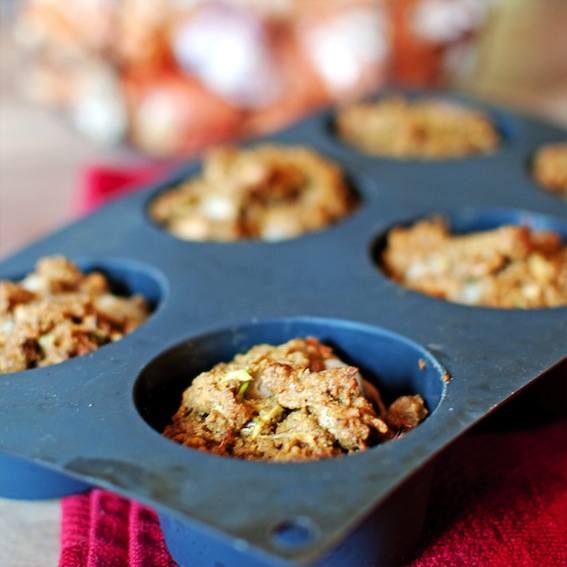
These muffins combine the toasty nuttiness of buckwheat flour, the warm earthiness of cumin seeds and the saltiness of melted cheese. Just what you need when you’ve been abusing the absinthe.
Ingredients (makes 8-10 muffins)
2 eggs
150ml olive oil
150g buckwheat flour
50g polenta
½ teaspoon bicarbonate of soda
1 teaspoon baking powder
Sea salt and freshly-ground black pepper
1 teaspoon cumin grains
150g courgettes, peeled and grated
2 shallots, peeled and chopped
150g comté cheese, cut into very small cubes
Preheat the oven to 180°C. Break the eggs into a mixing bowl, add the olive oil and then beat well. Mix the dry ingredients together (flour, polenta, bicarbonate of soda, baking powder and seasoning) and combine with the egg/oil mixture. Stir in the remaining ingredients and then transfer to a muffin tin, filling each mould almost to the top. Bake for about 15 minutes, or until a skewer comes out clean. Best served warm. -
Chicken risotto and scary toys


I feel acutely embarrassed on Java’s behalf telling you this story, but needs must. A few weeks ago, a kind friend gave us some stuffed toys. Obviously I don’t play with toys because I’m fully-developed and mature, not an emotional car crash like some. So I gallantly left them all to ‘some’. She seemed to quite enjoy them at first, but soon became terrified after trying to ‘kill’ one of them with her dainty little girl teeth. Its insides spewed out all over her bed, traumatising her so much that she wouldn’t go near the bed after that, even once Bossy had tidied up. Of course this meant that she ended up on my bed and I had to decamp to the couch because she snores like a steam train. In an attempt to regain my bed, I tried to explain that she hadn’t really killed the toys because they weren’t alive in the first place and their ‘innards’ were only stuffing, but her dippiness has hidden depths and she wasn’t to be consoled. One thing I’ve noticed is that dogs with very long names – Java’s full name is Java de la Croix de Ganelon – are often the most irretrievably dippy. I’m just plain old Hugo, which speaks volumes don’t you think?

Ingredients (serves 4)
1 tablespoon olive oil or ghee
1 onion, chopped
1 shallot, chopped
2 cloves of garlic, crushed
6 mushrooms, sliced
400g rice (I used basmati)
50ml white wine
Se salt and freshly ground black pepper
½ teaspoon saffron
½ teaspoon turmeric
½ teaspoon paprika
2 tomatoes, blanched, peeled and chopped
1 litre chicken or vegetable stock
200g frozen peas
100g bacon, cooked and sliced
400g leftover chicken
50g parmesan, grated
Heat the oil or ghee in a large frying pan and brown the onions, shallot, mushrooms and garlic until soft. Add the rice and stir well until it is all coated with oil, then add the wine and simmer until reduced. Add the seasoning and tomatoes and then about a quarter of the stock and leave to simmer, stirring until the stock has been absorbed. Add the peas and continue adding stock and stirring until the rice is almost cooked. Add the bacon and chicken, stirring well. Once the bacon and chicken are completely heated through and the rice is cooked, remove from the heat and add the grated parmesan, stirring until melted.
-
Black pepper: The King of Spices

Originating in India and now grown in South-East Asia, Brazil and Africa, black pepper – or piper nigrum – is also known as the King of Spices and has a long history of medicinal use. More recently, numerous studies have proven and revealed its numerous therapeutic benefits.
As the world’s most traded spice, one of black pepper’s main, and perhaps most interesting, properties is that it potentiates the assimilation of nutrients; vitamins, minerals and phytonutrients are better absorbed when taken with black pepper. It is the compound piperine, an alkaloid compound present in black pepper that helps to improve absorption by increasing bioavailability. It is so effective that it might double the nutrients taken in from food. This property also helps drugs work more efficiently.
The piperine content of black pepper also makes it an excellent digestive stimulant. It informs the taste buds that the stomach should get ready to produce more hydrochloric acid, essential for the digestion of proteins and other foods in the stomach. It is reputed for its carminative properties and is frequently used to treat gastric problems such as nausea, diarrhoea and even intestinal parasites.
Black pepper might also help you lose weight. According to a study published in 2006, black pepper acts as a thermogenic, meaning that it increases the metabolic rate. Another study found that piperine suppresses genes needed for new fat cell growth, and, as a result, it fights the development of new fat cells.
Black pepper’s antioxidant and immuno-stimulating properties make it a effective barrier against bacteria. Its expectorant properties mean that it is recommended for sore throats, cold, chronic bronchitis and laryngitis. Several studies even suggest that piperine, especially when combined with turmeric, has the ability to kill cancer cells.
Finally, a study published in 2012 reported that piperine increases serotonin levels in the brain, which means that it could be effective against depression. Regular consumption of black pepper also increases cognitive function and enhances brain activity in general. -
Spicy carrot cake and a ladies’ horse
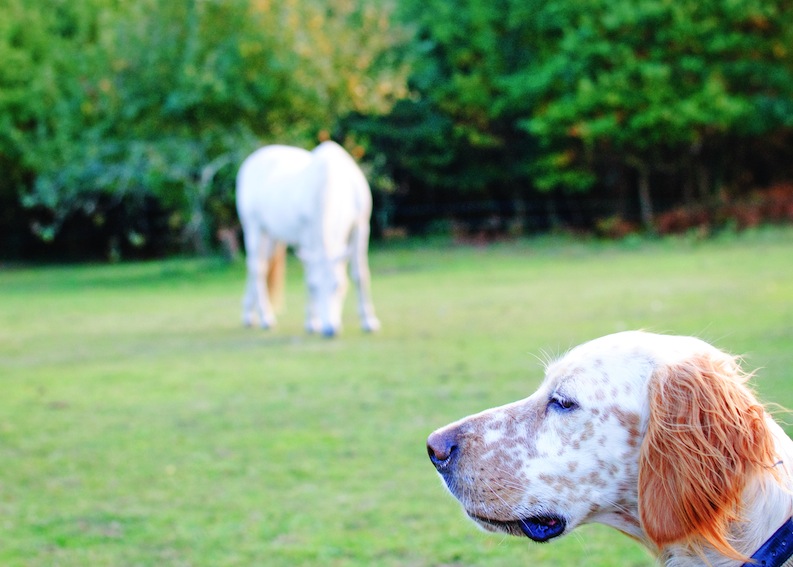
I don’t really understand girls. I thought I did, but I don’t. Océane (the only mare of the four horses), took an instant, irrational dislike to Bijou (the four-year-old with a ditch problem) when he first arrived. In fact, she was so aggressive and unpleasant that he ended up covered with tooth and hoof marks and they had to be separated. Yesterday, having spent the whole previous night loudly whinnying for her long-lost love, she barged her way through the electric fence (which made The Tall One very cross) and hasn’t left his side since. At one point, Bijou, in an attempt to free himself from her neediness, jumped out of the field. This sent her positively hysterical and she bucked and called after him until he’d been rounded up and returned to her side. Still, at least with all her silliness I added a new word to my already fairly extensive vocabulary: Fickle.
Which brings me to Java. Having once been absolutely terrified of horses (or the ‘gigantic dogs’ as she calls them, bless her) she now chases Bijou around the field until she manages to grab his tail between her teeth. Then she doesn’t let go until he’s galloping faster than she can run, which, although it pains me to say it, is pretty fast. It exhausts me just watching them. So what is it with the girls and Bijou? He must have hidden powers of seduction, although I fail to see how he can be more charming than me…

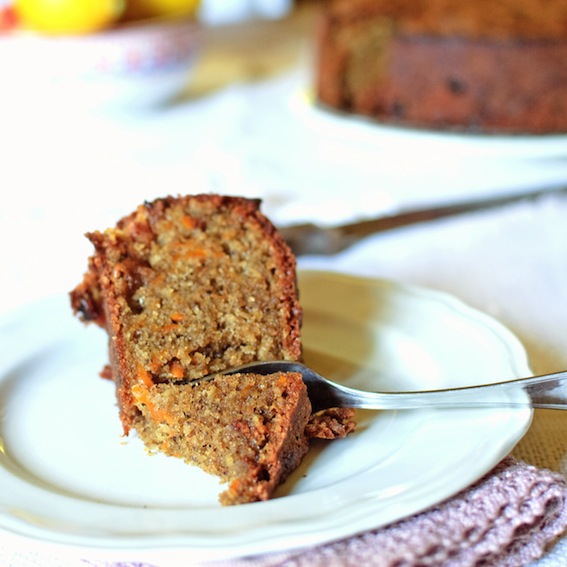
I assume that this carrot cake must be for the horses; they’re the only ones silly enough to eat a cake made with carrots and apples. I’m not a fan obviously, but according to everyone else it is very tasty.
Ingredients (serves 16)
250ml olive oil
175g cane sugar
4 eggs
250g carrots, grated
100g apple, grated
100g ground almonds
150g spelt flour (or wheat flour)
1 teaspoon bicarbonate of soda
1 teaspoon baking powder
Pinch of salt
1 level teaspoon garam masala (or allspice)
1 level teaspoon ground ginger
75g raisins pre-soaked in rum
100g walnuts, chopped
Grease and prepare a medium-size cake tin and preheat the oven to 180°C. Place the oil and sugar in a mixing bowl and beat well. Add the eggs and continue to beat until the mixture becomes pale in colour. Add the grated apple and carrots to the mix and then fold in the almonds, flour, bicarbonate of soda, baking powder, seasoning and spices. Lastly stir in the raisins and walnuts and transfer to the cake tin. Bake for 50 minutes, or until a skewer inserted into the centre comes out clean. -
Cream of porcini soup and dog day trips
Immediately following The Ditch Fiasco, Hugo was very solicitous and insisted on staying by my side at all times. This was very sweet, but a bit of a logistical nightmare when it came to showers etc. After a little while though, the novelty of me not moving anywhere very fast wore off and he began to search for new horizons. Deciding that Luc’s porcini hunts were a poor substitute for long hikes, Hugo took matters into his own paws by organising vigorous ‘sorties’ every morning to our neighbours’ house a kilometre away. This was a sly plan for two reasons: Their cats hadn’t yet eaten their food (which he gallantly saw to) and his coming home either entailed a horse being saddled up to accompany him, or his absolute favourite – a car trip. I’ve managed to curtail the visits for the moment with the promise of short walks and Java’s electric collar. Why is it I seem to specialise in errant, insubordinate animals?
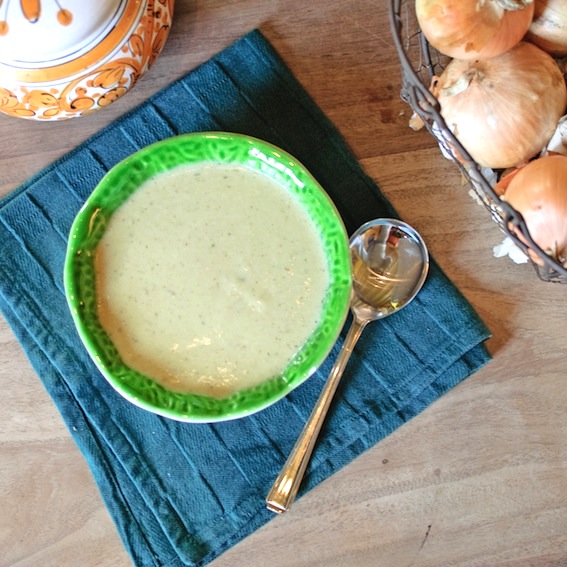
We have had more porcini than ever this year. I think that the combination of a hot Indian Summer and just the right amount of rain have made for ideal growing conditions. Porcini soup sounds very decadent, but less so when you’re finding several kilos a day.
Ingredients (serves 4)
300g fresh porcini mushrooms, cleaned and sliced
30g butter
2 shallots, peeled and sliced
1 clove garlic, crushed
1 medium size potato, peeled and cubed
2 tablespoons parsley, chopped
10ml white wine
Sea salt and freshly-ground black pepper
1 teaspoon paprika
750ml chicken or vegetable stock
50ml single cream
Place the mushrooms, butter, shallots and garlic in a large saucepan, heat gently and leave to ‘sweat’ for about five minutes. Add the potato and parsley and cook for another couple of minutes. Add the white wine and seasoning and then the stock. Bring to a gentle simmer and leave to cook for a further 20 minutes. Remove from the heat, add the cream and blend. -
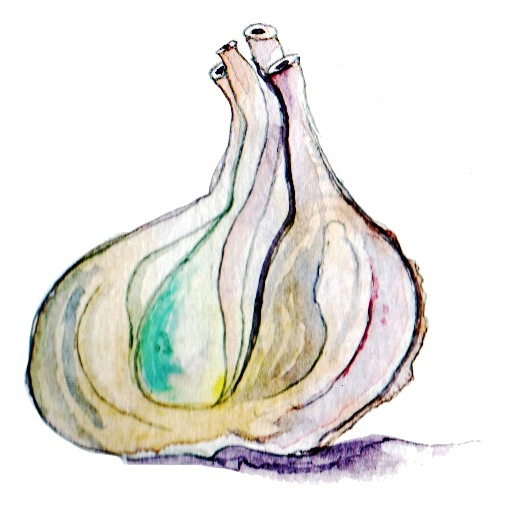
The wonders of garlic

Garlic is one of the most broad-reaching therapeutic plants in existence. Louis Pasteur observed garlic’s antibacterial activity in 1858 and it has been used as a food and medicine for thousands of years. Greek military leaders fed it to their troops to strengthen them for combat and the Russians used it to treat soldiers’ wounds during World War II after they ran out of antibiotics.
Indeed garlic has a myriad of medicinal uses. Its antioxidant activity and high sulphur content offer powerful protection against blood clot formation. The sulphur-based essential oils, which cause the pungent odour, are extremely effective at destroying both viruses and bacteria as they move through the body, in particular in the respiratory and digestive tracts. It is also second to none for expelling worms.
The high sulphur content of garlic is also very useful for joint health. Sulphur makes up about 75% of all connective tissues and a good dietary source offers support to these tissues, making sure that they stay strong and supple.
Garlic is also now often used for its advantageous effect on the cardiovascular system. Hundreds of studies show that garlic offers protection against the formation of plaques within artery walls. In addition to this, garlic seems to lower blood pressure, probably by it vasodilatory action which causes blood vessels to relax thus lowering overall pressure.
There is even evidence to suggest that regular garlic consumption may protect against colon cancer by protecting the cells from damage (antimutagenic effect). It has a positive effect on digestion in general and swelling and irritation may be rectified with regular consumption.
Although adding garlic to your dishes will always be enormously beneficial (and delicious) whichever way you decide to use it, the absolute best way to consume it is raw. What’s more, the oils are made even more powerful when garlic is crushed or very finely chopped as this starts the enzymatic process that releases the active compounds. Use garlic raw in salad dressings, over roasted vegetables or added to your dishes at the last minute. Bon appétit!
-
Spaghetti alla vodka and dogs on ditches

Hello everyone! Due to Broken Bossy’s temporary incapacitation I have taken on many extra responsibilities, including cooking and writing today’s blog. Obviously I’m quite exhausted, but BB is progressing very well, although she had a bit of a cold which caused her to utter eye-wateringly naughty words every time she sneezed. Still, on the bright side, at least she lost her voice for a bit which, believe me, had not been adversely affected by the accident. I don’t consult with Java on many subjects as I don’t ever believe she can contribute to my overflowing fountain of wisdom and knowledge, but I did ask her recently what she thought about the ditch incident. We are both completely flummoxed as to all the fuss and bother involved. How could you possibly hurt yourself so badly falling into one in the first place, and how could it take so long and involve so many people to get out? Java and I are in and out of ditches all day without so much as a blink of an eye, but Bossy? Not so; one little ditch visit and it’s pandemonium followed by wheelchair, crutches and an onslaught of barked commands for the next six weeks. I really don’t know why humans think they’re superior – they’re so fragile! I’m just glad to be a tough, ditch-smart dog.
I’m not an expert at cooking for humans so we’re eating lots of things from the freezer, which seems to be packed full of bags of tomato sauce. If you already have a good tomato sauce, this recipe is very easy and I thought that the vodka content might help with BB’s pain a bit!
Ingredients (serves 4)
250g spaghetti (I used spelt spaghetti)
Pinch of sea salt
300g fresh tomato sauce
75ml vodka
75ml cream
Grated Parmesan and freshly-ground black pepper for serving
Cook the pasta in salted water according to the instructions. Add the tomato sauce and vodka to a medium saucepan and heat for a few minutes, stirring well, until the mixture begins to reduce. Add the cream, stir to combine and then reduce heat and leave to simmer very gently for a few minutes. Combine the drained pasta and sauce and toss to mix well. Sprinkle on the Parmesan, grind on the pepper and serve.
This recipe has been submitted to the ‘Pasta Please Challenge’, hosted by Supper in the Suburbs and Tinned Tomatoes.