-
Tandoori chicken breasts and a twisted ankle

Tandoori chicken breasts 
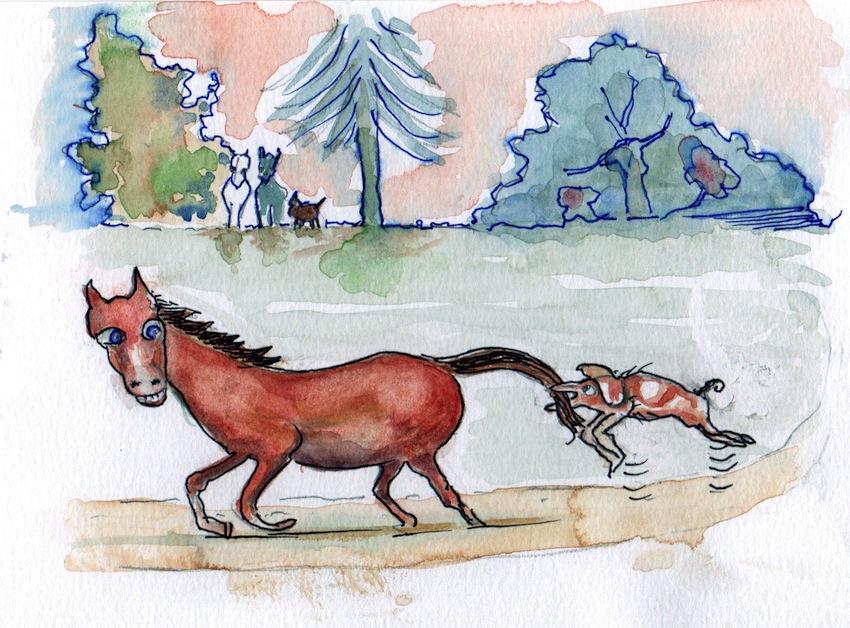
The equine osteopath paid a visit to put Bijou’s ankle back into place the other day. He had dislocated it while gallivanting furiously around the field with Java; just how incompetent can a horse be? It’s a shame the osteopath couldn’t put his brain back into place too. At one point he and Java were so over-excited that he was bucking, pirouetting and galloping simultaneously. And I certainly don’t say this as a nod to his prowess.In other news, Java has been passing the time chewing on hens’ heads. I’m not sure whether her intent is malicious or not, although I do know that I wouldn’t feel comfortable about having my head chewed on by Java. I will have to explain to her that, in civilised circles, you wait until the chicken is dead, and preferably cooked before chewing on it. I do feel a little responsible though – I’m afraid she may have spotted me doing something similar when I was a dishy young whippersnapper (as opposed to the handsome and distinguished older man that I have become) and one of the hens and I were an item. Those were the days…
Hopefully this recipe will show Java why it’s worth waiting for the chicken to be cooked before eating it, although I’m not holding my breath

Recipe for Tandoori chicken breasts (serves 4)
- 4 chicken breasts, cut into strips
- 150g plain yoghurt
- 1 tablespoon olive oil
- Juice of 1 lemon
- 2 shallots, peeled and chopped
- 2 cloves of garlic, crushed
- 1 teaspoon fresh ginger, grated
- 1 teaspoon ground cumin
- 1 teaspoon ground corinder
- 1 teaspoon chilli powder
- 1 teaspoon garam masala
Mix the ingredients together and marinate the chicken breasts for at least an hour, or overnight if possible. Preheat the oven to 220°C. Place the chicken on a lightly oiled baking tray and cook for about 15 minutes, depending on the size of the pieces. Delicious served with basmati rice or chickpea pancakes.
-
Orange, mint and almonds and unifying sunsets
Orange, mint and almonds Hugo and Java are not natural allies. I’ve always dreamed of having dogs that cuddle up together in the same basket, but alas, it is not to be. The room that their baskets and the space necessary between them take up in order to prevent friction and growling is surprisingly large. Java would love to be Hugo’s best friend, but the feeling is not reciprocated. Not one bit.
If she so much as deigns to lie on the same rug as him, she receives her marching orders accompanied by a dark, ominous look. I suspect matters aren’t helped by the fact that Hugo is rather envious of her speed; he used to easily outrun deer and rabbits in the forest, but age has slowed him down. Java can outrun anyone and anything, including her own sense, which is admittedly thin on the ground.
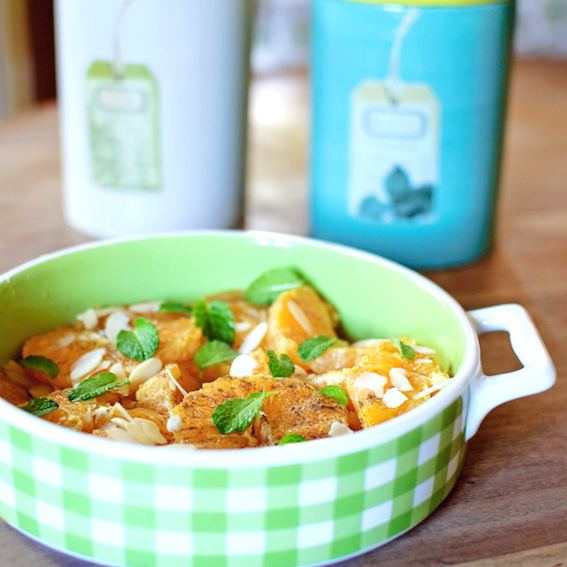
So imagine our surprise when we looked outside the other evening to see the two dogs lying side by side, bathed in the soft evening light. They were under a budding oak tree watching the magnificent sunset and it was as perfect a picture of tranquility, contemplation and friendship as I have ever seen. As soon as Hugo noticed us though, he got up, visibly horrified at having been caught. He made a show of vigorously shaking himself free of any residual girly sentimentality. Despite Hugo’s unchivalrous behaviour, and as fleeting as the moment had been, it made Java and me very happy…
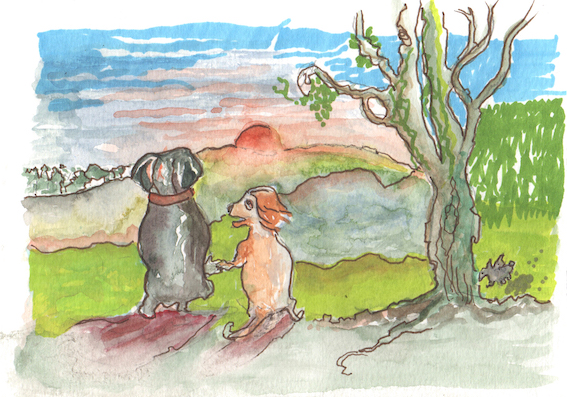
Recipe for orange, mint and almonds (serves 4)
- 4 large dessert oranges, peeled and sliced
- 2 teaspoons orange flower water (optional)
- 2 teaspoon honey
- ½ teaspoon freshly-grated ginger
- ½ teaspoon cinnamon
- Handful of sliced almonds
- 8 fresh mint leaves
Arrange the orange slices in a shallow bowl. Add a little water, the orange flower water, honey, ginger and cinnamon to a small saucepan. Bring to a simmer over a low heat, stirring to dissolve the honey. Remove from the heat. Drizzle the syrup over the oranges, garnish with the almonds and mint and serve with a dollop of crème fraîche.
-
Black cumin seed: the cure for everything except death

Black cumin seeds on chickpea pancake The prophet Mohammed stated in his Hadith that black cumin cures every illness except death. The use of black cumin seed, also known as nigella seed (nigella sativa), originated in Ancient Egypt, where it was reputedly used by Queen Nefertiti and Cleopatra. Traces of the oil were found in Tutankhamen’s tomb.
Hippocrates and black cumin seed
Hippocrates, the father of modern medicine and the phrase ‘vis medicatrix natural‘ (the healing power of nature) used the oil to help with digestive and metabolic disorders.
Clinical studies prove time and time again black seed oil’s therapeutic uses, due mainly to its Thymoquinone content. This study, one among many, addresses the multitude of potential medical uses of the oil. It has been studied as an aid to fighting cancer, asthma and also as a tool to fighting drug-resistant bacteria like MRSA. In fact, there are so many studies backing up its efficacy, that it ranks amongst the top evidence-based herbal medicines. Black cumin seed oil has analgesic, anti-inflammatory, antioxidant, antibacterial, antiviral, anti-parasitic and anti-fungal actions.
Digestion aid
It helps digestion: the oil and seeds are carminative, which means they aid digestion and can help to decrease bloating, gas and stomach cramps. If you suffer from irritable bowel syndrome (IBS), black cumin oil may be very beneficial as it’s been shown to have antispasmodic effects on the smooth muscle of the intestine. Black Cumin seed also appears to have anti-ulcer properties against Heliobacter pylori.
Alleviates allergies
Black cumin seed oil alleviates allergies: The oil has a significant anti-histamic action. The benefits experienced were likely to be due to the effects of the black cumin oil on immune response, as well as its antihistamine effects. It also appears to have bronchodilatory properties, making it suitable for use with asthma and bronchitis.
Nervous system support
It has been widely used to treat diseases of the nervous system such as memory impairment, epilepsy, neurotoxicity and pain. Black cumin oil also has mood stabilising, anti-anxiety and anti-depressant actions; its effectiveness in these areas is probably due to the fact that it increases GABA.
Liver support
Black cumin seed helps detoxify and heal the liver when the liver is stressed due to medication side effects, alcohol consumption, overeating or disease. Scientists confirmed in a recent study that black seed oil benefits liver function and helps prevent damage.
Diabetes prevention
Black seed oil is one of the few substances that has been found to help prevent both both type 1 and type 2 diabetes: Doctors from the Indian Council of Medical Research found that it ’causes gradual partial regeneration of pancreatic beta-cells, increases the lowered serum insulin concentrations and decreases the elevated serum glucose.’ According to the study, it improves glucose tolerance as efficiently as metformin without the significant adverse effects.
Immune system benefits
Black cumin seed oil is effective for the immune system, either to enhance or balance. Particularly beneficial for autoimmune disease, it acts by balancing the immune system; it increases immune function without encouraging an immune reaction against healthy tissue in the body.
It may be taken in seed form (I often add seeds to bread and savoury pancakes, see above), or in oil form (I take one teaspoon of this one mixed in water twice a day). It may also be applied to the skin in case of skin conditions such as eczema and boils to soothe inflammation, itching and heal scars. -
Roasted mackerel with white wine and mustard vinaigrette and pigs in the woods

Roasted mackerel with white wine and mustard vinaigrette For some reason I was thinking about wild boar while out walking with the dogs yesterday evening. As you do. Boar have really proliferated in this area over the past few years and often make quite a nuisance of themselves; it’s obvious where they’ve been because they scratch at the ground, turning up sand, dirt and dead leaves.
The sows are particularly aggressive in the spring when they have their young to protect. Although we’re seeing more and more traces, it’s still quite rare to actually see them. My thoughts and I were on a little path by the river where, in the nine years we’ve been here, I have never seen a soul (or a pig for that matter), when I heard the distinctive sound of rustling leaves coming from the bushes. My mind’s ear might even have heard an ‘oink’.
Despite all evidence pointing towards a killer drove of wild pigs, it actually turned out to be a cyclist looking for his mobile ‘phone that he’d dropped the day before. It’s just as well I don’t have a hunting rifle, because I might have shot him. Flooded with relief at having cheated ‘death by wild boar’, I momentarily forgot the correct French term, sanglier, and said: ‘Oh, I’m sorry! I thought you were a pig!’.
In terms of animal insults, pig is definitely right up there, and it has absolutely none of the nobility of the term boar. Desperately trying to redeem myself I continued: ‘Don’t worry, now I see your fluorescent clothing , you look nothing like a pig’. As if he would have been a dead ringer for one minus cycling garb. Luckily my inner, and extremely repressed, sage intervened to say that now would be a good time to stop talking. Forever if at all possible.
It was not one of my finer moments. I must say though, he was exceedingly gracious for someone who had just been accosted by a total nutter in the woods. Especially as he must have been quite keen to escape. I never did find out if he found his ‘phone.
This recipe is adapted from a Gordon Ramsay recipe. It’s quick and simple to make and the result is moreish and very healthy. Mackerel is one of the richest fish sources of omega 3 which is beneficial for the heart, helps prevent diabetes, improves bone and joint health and improves memory and mental status.
Recipe for roasted mackerel with white wine and mustard vinaigrette (serves 4)
- 2 cloves of garlic, peeled and crushed
- 2 teaspoons paprika
- 1 teaspoon sea salt
- 1 tablespoon olive oil
- 8 small mackerel, gutted
- 500g new potatoes, peeled
- 4 shallots, peeled and finely sliced
- For the vinaigrette:
- ½ teaspoon curry powder
- 1 tablespoon white wine vinegar
- 1 teaspoon Dijon mustard
- 4 tablespoon olive oil
- Sea salt and freshly ground black pepper
Preheat the oven to 200°C. Add the garlic, paprika, sea salt and olive oil to and small bowl and mix to form a smooth paste. Rub the mackerel with the paste and set aside in a ceramic baking dish.
Boil the potatoes under tender, then drain. Return them to the pan with a bit of sea salt and olive oil and crush roughly with the back of a fork, adding and combining the chopped shallots.
Roast the mackerel for about 20 minutes. To make the vinaigrette, place all the ingredients in a bowl and beat well with a fork until velvety-smooth.
Serve the mackerel on the potatoes and topped with vinaigrette.
-
Peanut chicken stir fry and food glorious food!

Memories are triggered by different senses: Smell (olfactory memories), sound (echoic memories), sight (iconic memories) and touch (haptic memories). For me, without wishing to plagiarise Proust and his beloved madeleine, there seem little doubt that my memories are triggered by food (perhaps known as gluttonous memories).
By far the most vivid recollection of my first visit to the East Coast of the US when I was seven is not, delightful though they were, the Empire State Building, the Statue of Liberty or The Guggenheim, but a generous portion of sublimely tangy lemon meringue pie – the first I’d ever come across – in a drugstore in Manhattan for breakfast one morning. Clams on the beach in Westport, Connecticut come a close second.
My frequent visits to Scotland as a child were punctuated by fish so fresh it crumbled the second it glimpsed a fork. Crucially, it was always served with a side order of pure, bracing, iodised air. School food was obviously a low point in my gastronomic narrative; the less said the better, but I will just point out that I was properly traumatised by spam fritters at a very early age, and the words ‘Angel Delight’ still set off a Pavlovian gag reflex. I think the better you eat at home, the more potential for grievous bodily harm the food you eat – or try your hardest not to eat – at school presents. This was certainly true in my case.
The highlight of my trip to the Italian Riviera in the late 80s was not the picturesque, colourful and much revered Porto Fino, but a plate of the most exquisite home-made pasta stuffed with walnut paste and dripping with gorgonzola sauce served to me in a simple family-run restaurant in the backcountry. I could easily have eaten several helpings and it’s just as well I wasn’t given the chance, because that wouldn’t have made for one of my finer, more elegant moments…
My memories from the two years I spent in the US in the early 90s? Wilhelm’s dark chocolate and raspberry cheesecake and the 6cm thick chargrilled steaks at The Hyde Park Grill. Do I remember dancing at my wedding? No I’m not sure I do, although I suspect I didn’t as my husband was sporting several broken ribs and a fractured sternum, having being thrown off my engagement ring (a Lusitano stallion). There’s a sentence that’s probably never been written before. I do remember the guinea fowl in apricot sauce though, and believe me, I certainly wasn’t the sort of delicate, blushing bride who had lost her appetite to nerves. We honeymooned in Burgundy which is famous for its many Michelin starred restaurants.
Randomly, the most perfect, simple green salad with walnuts after a day on the ski slopes in the Pyrenees about five years ago left an indelible mark. Usually after skiing, you’d think that a rich and satisfying fondue or raclette would be called for. But no; I have never, before or since, experienced such a rush from eating what was essentially a plate of rabbit food.
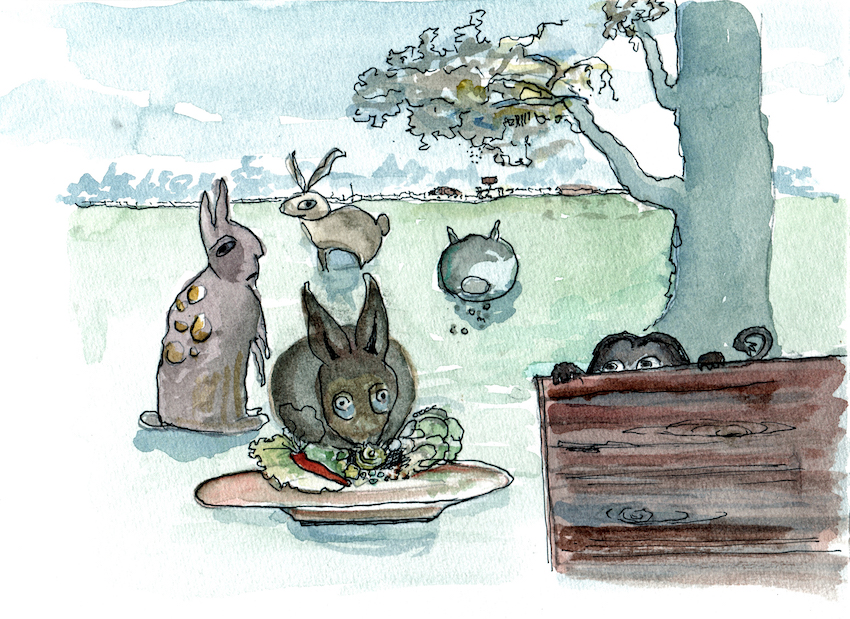
I suspect Léo’s childhood food memories will feature carrots and broccoli quite heavily because they are just about the only vegetables that don’t motivate a lengthy speech on nausea-inducing unpalatability. I try to avoid serving him other vegetables unless I have my earplugs to hand.
Ingredients (serves 4)
2 tablespoons groundnut oil
1 red onion, peeled and sliced
2 cloves of garlic, peeled and crushed
2 carrots, peeled and sliced
4 mushroom, peeled and sliced
1 broccoli (I used romanesco), cut into florets
4 chicken breasts, cut into strips
3 tablespoons peanut butter
2 tablespoons soya sauce
1 tablespoon honey
100ml chicken stock
1 teaspoon fresh or ground ginger
1 teaspoon chilli powder (optional)
Sea salt and freshly-ground black pepper
Handful of crushed peanuts to garnish
Brown the onion and garlic in a wok, adding the other vegetables and chicken pieces gradually. Cook for a few minutes more before adding the peanut butter, soya sauce, honey, stock and seasoning. Stir fry over a medium heat until the chicken is cooked through and the carrots and broccoli are tender. Serve with noodles, rice or quinoa, garnishing with the crushed peanuts. -
Savoury French toast and stunts from the past
Léo’s French teacher recently asked the class to write a chapter from their hypothetical future autobiographies as an exercise. It had to be a memory from their early childhood, and the memory Léo chose was when he and Poly the pony went flying head over heels together in a cornfield when we were out riding one day. Neither of them was hurt — they both got up and shook themselves off and our ride continued. When we got home, Poly, who, amongst other things, had a total disregard for electric fences, decided to visit Léo in the kitchen. Léo claims in his ‘memoirs’ that Poly had come to apologise for having catapulted him into the corn, but I think it might also have had something to do with the big bowl of apples on the kitchen table. I fear that the childhood part of Léo’s autobiography is going to contain an appalling amount of tales of thoroughly undisciplined animals and their exploits. I can only hope that he focuses on the animals and glosses over his parents’ mishaps…

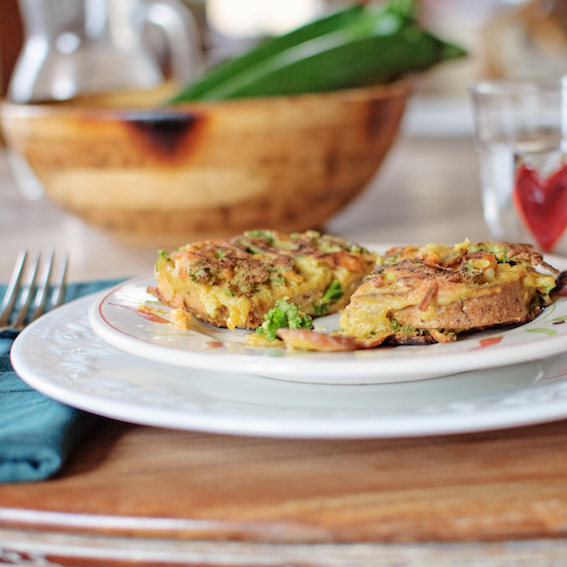
Ingredients (serves 4)
4 eggs, beaten
75g chickpea flour
½ teaspoon bicarbonate of soda
75ml water
1 small onion, chopped
1 clove of garlic, crushed
1 small courgette, chopped
1 carrot, grated
2 kale leaves, chopped
1 tablespoon olive oil (or ghee)
Sea salt and freshly ground black pepper
¼ teaspoon garam masala
¼ teaspoon turmeric
4 large slices of bread (or 8 small)Place the eggs, chickpea flour and bicarbonate of soda into a mixing bowl. Beat well while slowly adding the water to obtain a smooth batter. Add the chopped/grated vegetables and seasoning, stirring well.
Dip the bread into the mixture until each slice is well-coated. You may have to spoon the vegetables onto the toast while it’s cooking. Heat the olive oil or ghee over a medium heat in a non-stick frying pan and fry the bread on both sides until golden brown.
This makes a delicious complement to soup or salad. -
Lemon cream meringue and dwindling decorations
I hope everyone had a lovely Christmas. We did and, true to form, Hugo spent most of the time either hiding from Java or chewing her ears, while Java spent most of the time either looking for Hugo or chewing up paper hats, corks and tree decorations. Needless to say, her visits to the naughty corner were not infrequent. The hens, I suspect, breathed a collective sigh of relief at having, once again, been spared.

I kept expecting to come down in the morning to the sight of the Christmas tree prostrate, having ‘fainted’ in the night. But no, Java prefers to play the long game when it comes to dismantling the tree, and her progress is insidious and incisive. She’s a pretty little, furry, decoration-seeking stealth missile and if it weren’t for the telling crunch of trodden-on glass baubles on the floor, and glitter and tinsel in places you would least expect, you would hardly know she had been untoward. She isn’t devious but she prefers to proceed this way for practical reasons: the trauma and commotion of a whole tree falling over at once would tip her right over the edge.
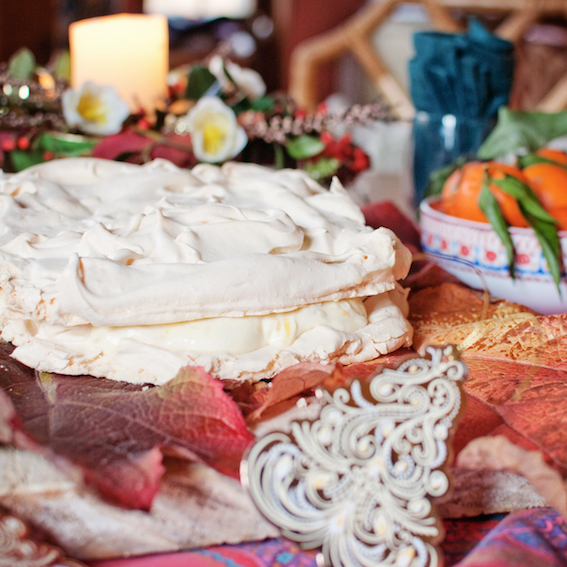
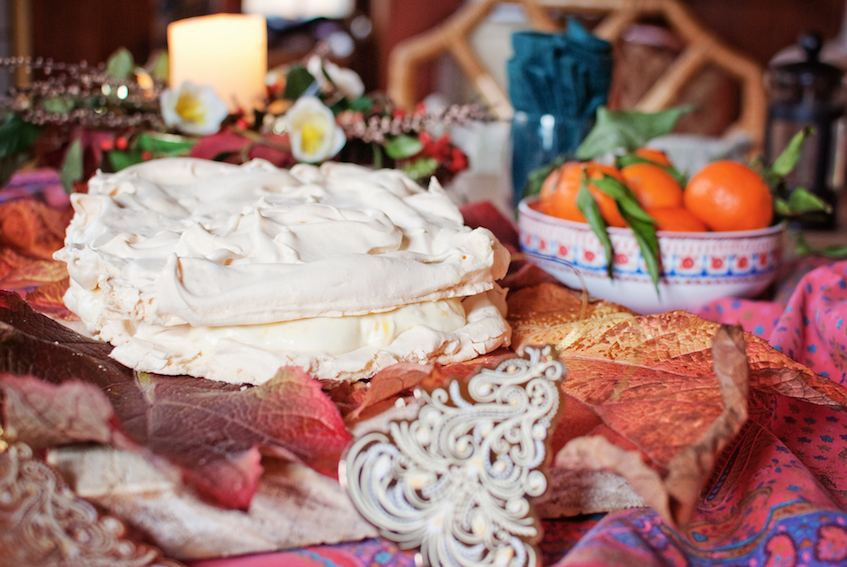
This dessert is ambrosial. It’s light and refreshing, almost sparkling – a very welcome antidote to a rich main course.
Ingredients (serves 6-8)
4 eggs
2 lemons
320g sugar
pinch of salt
400 ml whipping cream
Meringue:
4 egg whites
200g sugar
pinch of salt
Preheat the oven to 140°C. Add the egg whites and salt to a medium-size mixing bowl until foamy. Gradually add the sugar, a tablespoon at a time, beating until stiff peaks form and sugar dissolves.
Spread the meringue mixture onto greaseproof paper covered baking trays. Bake for 30 minutes and then turn off the oven and leave for an hour. Remove the meringues and leave to cool.
Lemon filling:
4 egg yolks
120g sugar
Grated rind and juice of 2 lemons
400ml whipping cream
Place the egg yolks and sugar in a small saucepan and stir over a gentle heat until paste-like. Add the lemon rind and then the lemon juice little by little until the mixture is thick and smooth. Remove from the hear and leave to cool completely.
Beat the whipping cream until soft peaks form and then fold into the cooled lemon mixture. Spoon the mixture into one of the the cooled meringue shells and gently place the other one on top. Chill overnight.
-
Green and orange winter vegetables and a gallant caretaker

I noticed that Bossy hasn’t been boasting about her latest achievement: a broken bone in her foot, which she achieved running around barefoot like a child. (I’m only telling you this because I felt she was a little bit dismissive — caustic even — about my entirely-justified need for a change of location for my bed in her last post.) Java goes absolutely stark raving loony if she doesn’t get enough exercise so, in the absence of a suitably tiny strait jacket, Bossy has been taking us out on her bike, pedalling with one foot. Because she’ssuch a klutztemporarily handicapped, I’ve been staying by her side as her balance looks more than a little bit precarious. Apparently though, I underestimated her ineptitude because she managed to cycle into me and fall off anyway. She wasn’t cross though because I think she knew I was just trying to be supportive.
In other broken bone-related news, the Tall One has been seeing an acupuncturist, Mr Chan, about his shoulder. He seemed quite upset that Mr Chan hadn’t shown any enthusiasm to see his entire x-ray collection as opposed to just the relevant ones. I have to say, I can see Mr Chan’s point; extensive and chronologically-ordered photographic evidence of someone else’s fracture history is hardly inspiring is it?
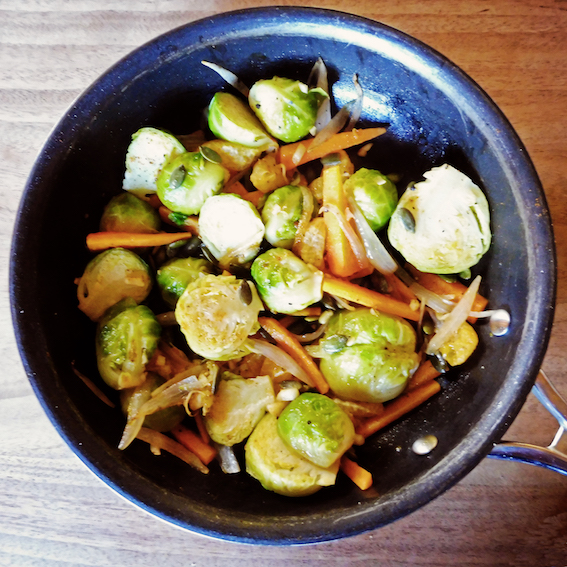
As you all know, I’m not a vegetable fan, but I have to say this dish was quite pretty and apparently very healthy. With a wide variety of nutrients ranging from magnesium and manganese to copper, protein and zinc, pumpkin seeds pack quite a punch. Having said this, Bossy and Tall eat them all the time and it doesn’t seem to stop them from doing silly things.
Ingredients (serves 4)
500g Brussels sprouts, peeled and halved
2 tablespoons olive oil
4 shallots, peeled and sliced
2 cloves garlic, peeled and crushed
2 carrots, peeled and julienned
1 handful pumpkin seeds
1 handful flaked almonds
1 satsuma, peeled and cut into segments
Sea salt and freshly ground black pepper
½ teaspoon paprika
½ tablespoon honey
Cook the Brussels sprouts briefly in salted boiling water for about five minutes, drain and set aside. Heat the olive oil in a large frying pan and fry the shallots and garlic until golden. Add the sprouts and carrots and cook until the carrots soften a little (about five minutes). Add the pumpkin seeds, flaked almonds, satsuma pieces, seasoning and honey and cook for another few minutes until everything is honey-coated. Serve! -
Beef bourguignon and a god complex

Most dogs have beds; Hugo has a throne. He recently spent considerable time and energy trying to relay to us the fact that it’s wholly inappropriate for a dog of his stature to sleep on the floor. He dug his paws in and refused to sleep on his bed, creating temporary accommodation in other places such as the shower, sofas and on piles of dirty laundry. I could tell that he was getting increasingly irate with us for not understanding his problem and poor Java was very confused by the whole affair. And then I had an epiphany: Hugo doesn’t see himself as a common or garden ‘floor’ animal and thinks his bed should be raised accordingly. To him it is incomprehensible that he should sleep at the same level as Java. Complicated measures were taken (the facial expressions when I explained that my dog needed a bed at least 50cm from the ground were a sight to behold), and he now deigns to sleep in his bed again. I’m hoping that his delusions of grandeur aren’t going to be incremental or he’ll soon need a stepladder and the thought of explaining that to the man in the pet shop brings me out in a cold sweat.

Beef Bourguignon is an iconic French dish. Ideally it should be made with Charolais beef and Burgundy wine, although I make it using Bordeaux as that is local to us. It’s best made a day or two before you’re going to eat it to tenderise the meat and bring out the flavours more fully.
Ingredients (serves 4)
800g beef brisket, cut into large cubes
1 litre of full-bodied red wine
2 sprigs thyme
2 bay leaves
4 garlic cloves, crushed
4 tablespoons olive oil
2 red onions, peeled and sliced
4 shallots, peeled and sliced
100g mushrooms, peeled and sliced
100g pancetta, diced2 tablespoons flour (I used chickpea flour but plain will do)
500ml chicken or vegetable stock
4 carrots, peeled and cut into chunks
Salt and freshly-ground black pepper
Mix the beef, wine, thyme, bay leaves and garlic in a deep dish and leave to marinate in the fridge overnight. Preheat the oven to 150°C, scoop out the meat and set the marinade aside. Heat the olive oil in a large casserole dish and add the onions, shallots, mushrooms and pancetta. Toss the meat in the flour and add to the dish, gently browning. Add the stock and red wine marinade and bring to the boil. Add the carrots and seasoning and cook for about two hours. Delicious served with creamy mashed potatoes.
-
Buckwheat banana cake (gf) and a gluten free mouse
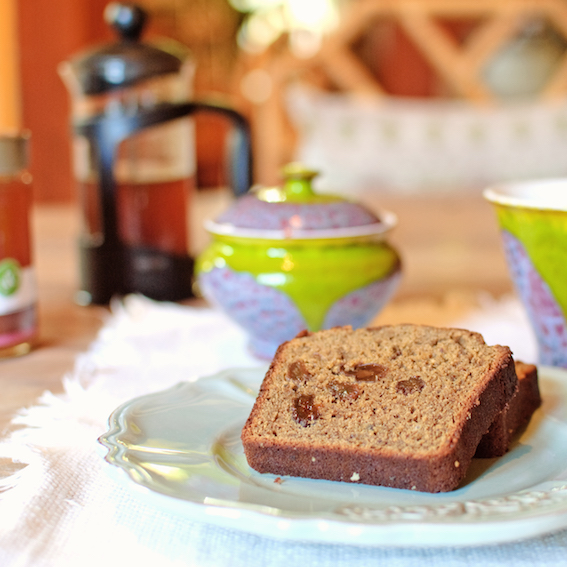
We are still being outwitted by a tiny little mouse who has become addicted to my buckwheat crackers. As she seems unfazed by the supposedly dissuasive mint essential oil with which I flood the cupboards, I did a bit of research and came across a sonic mouse deterrent. Rushing out to buy one, I discovered reading the small print while waiting to pay, that the device ‘could perturb domestic animals’. Totally panicked by this news, I explained (at some length) to the man at the checkout that my domestic animals didn’t need any more crazy in their lives, particularly my little English Setter with her fragile constitution, delicate nerves and rather unusual ways. Wondering whether the strange look he gave me was pity or amusement, I arrived home to the realisation that my extended monologue about my dogs’ mental health had been a case of the pot calling the kettle black: I was sporting a back-to-front top. And it wasn’t a subtle, hardly discernible back-to-front either; it was definitely an in-your-face ‘escaped from an asylum’ back-to-front. I made this cake to take my mind off the fact that I’m losing it, and intentionally omitted, OK totally forgot, some of the ingredients. It was however a very fortuitous error, because the result was a perfectly deliciously light, fluffy succulent cake. The bad news is though that the mouse has become a permanent fixture.
Ingredients
2 medium eggs
100g cane sugar
1 large ripe banana, cut and mashed with little lemon juice
100ml unsweetened apple purée
100ml plain yoghurt
2 tablespoons walnut oil
60g ground hazelnuts
170g buckwheat flour
a pinch of salt
1 teaspoon bicarbonate of soda
1 teaspoon ground cinnamon
1 teaspoon ground ginger
100g raisins, pre-soaked in rum
Preheat the oven to 180ºC and prepare a medium-sized loaf tin. Whisk the eggs and sugar until light and smooth and slightly fluffy and then add the banana, oil, apple purée and yoghurt and whisk a bit longer. Mix the ground hazelnuts, buckwheat flour, salt, bicarbonate of soda, cinnamon and ginger together and then combine well with the wet mixture. Stir in the soaked raisins and pour the mixture into the loaf tin and bake for 50 minutes or until a skewer comes out clean. Remove from the tin and leave to cool. Delicious served alone or with butter and jam. May be used a mouse bait too.