-
Braised beef with winter vegetables and stoned incidents

Braised beef with winter vegetables My annual old lady thermal cure was relaxing and very therapeutic, but not without incident. At the beginning of the first week I knocked myself out swinging on the shower rail. I wasn’t actually swinging on it, but I might just have been judging by the way it collapsed. Afterwards the nurse was very solicitous, and I think I caught a glimpse of ‘hopeless klutz’ and ‘not fit to be left unattended’ on my medical file. My slurred character wasn’t helped by The Great Hanky Haul a few days later: Luc, never one to do things by halves, asked me to pick up 16 (really, I mean wtf?) boxes of tissues and a bottle of whisky on my way home. The cashier, cheeky monkey, asked if I was ‘planning on coming down with a nasty virus then drowning my sorrows’.
During the course of the second week, I arrived back to the car to find it wedged in on both sides. My only option was to reach the front seat via the boot. Spending a morning saturated in mineral water and mud leaves you, or leaves me at least, absolutely stoned with little or no capacity to reason. This meant that my journey through the car via the back seat was complicated further by the fact that I hadn’t thought to remove my voluminous bag which was over my shoulder. To cut a long story short, the owner of one of the offending vehicules returned to find me swearing, sweating and stuck midway with my feet flapping. I felt I couldn’t give him too much of a bollocking as he graciously helped me exit through a side door, a bit like a doctor performing an emergency c-section.
This comforting casserole is the sort of thing you can leave on a very low heat nearly all day, while you’re out and about causing havoc.
Recipe for braised beef with winter vegetables (serves 4)
- 3 tablespoons olive oil
- 1 onion, peeled and sliced
- 2 shallots, peeled and chopped
- 4 cloves of garlic, peeled and crushed
- 800g stewing or braising steak, cut into rough pieces
- Cornflower to dust
- Sea salt and freshly ground black pepper
- 1 teaspoon paprika
- 2 parsnips, peeled and cut into large pieces
- 6 carrots, peeled and cut into large pieces
- 1 fennel, rinsed and cut into chunks
- 3 tablespoons tomato purée
- 1/2 bottle red wine
- 275ml beef stock
Preheat the oven to 150°C. Put the olive oil into a casserole dish over a medium heat, adding the onion, shallot and garlic and fry until golden. Toss the meat in the cornflour, season and then add to the casserole. Add the vegetables and tomato purée, wine and stock, gently stirring. Transfer to the preheated oven and cook for 3-4 hours or until the meat is falling apart tender. If you want to leave it longer check there is enough liquid and turn the oven down.
-
Lemon meringue, forest bathing and Happy New Year!

Lemon meringue I would like to wish everyone a very happy and healthy new year. We had a pleasant, but reasonably uneventful Christmas, with the exception of a lobster theft, three sick people and several lost presents. As is tradition in France, we have seafood on Christmas Eve and this year it was more a case of ‘now you seafood, now you don’t!’ Luc had bought oysters and lobster which he prepared in advance and stored in a ‘safe’ place outside. The ‘safe’ place turned out to be a deluxe al fresco buffet for the dogs. (Luc has form: The story of the year we misplaced a guinea fowl thigh). They left most of the oysters though because there is definitely something of a knack to oyster slurping. Also there was no lemon to hand (or paw) and they are nothing if not discerning. Maybe next year. After that, we felt badly for the cat who hadn’t been invited to join the impromptu feast, so he got a smoked salmon platter, while we made do with omelettes and green salad. Luckily the lemon meringue had taken refuge in the back of the fridge and, as the dogs haven’t yet worked out how to open the door, it was intact. Every year we make this dessert several times between Christmas and New Year, each time more friends arrive and it always disappears in a flash, even without the dogs’ help. I’ve posted the recipe before, but it definitely bears repeating.
We have nearly two kilometres of sandy track leading to our house. With its tree roots, rocks, potholes and animal traces, our track is not conducive to good car health, and our suspension has given out four times in the past year. We’ve resigned ourselves to the fact that a new car is in order, but buying it is proving to be a problem. After much procrastination, we made it through the door of a Suzuki showroom today, did a quick recce of the 4x4s (I’m boring myself just writing this) and then legged it before anyone could collar us. The idea of having the ‘horsepower, fuel consumption, and whether or not it does 0 to 60’ conversation makes me want to gnaw my arm off, and Luc is no better. We both glaze over if somebody so much as mentions anything vaguely auto-related. All we want is a reliable metal thing on wheels that goes ‘vroom’ without doing my back in, and has a very good tempered suspension system (or whatever the technical term is). All suggestions gratefully received.

I recently discovered that for the past 12 years or so I have inadvertently been an adept of the practice of Forest Bathing, or Shinrin-Yoku as it’s known in Japan where it originated in the 1980s. Numerous studies are testament to the calming and rejuvenating virtues of simply being beneath a forest canopy. Emphasis is placed on slowing down; a sweaty hike aimed at increasing the heart rate it is not! Benefits include a boost to the immune system, reduced stress and blood pressure, improved mood, a better ability to focus, quicker recovery from illness, decreased inflammation, increased energy and improved sleep. Japanese doctors promote forest bathing as an antidote to the hectic urban life. I can certainly vouch for the practice; whenever I feel stressed (just thinking about car showrooms for example), I instinctively head off into the pine forest that surrounds our house.

-
Turkey Tail medicinal mushroom (coriolus versicolor) and wet dogs

Turkey tail The rainfall in southwestern France in the past month has been unprecedented. The dogs are in despair; neither of them likes getting wet from rain, despite their enthusiasm for soaking in mud, puddles and rivers. They have been systematically checking the weather through all the doors (we have doors on three sides of the house) to see if it really is still raining in every direction!

Turkey Tail fungus is at its best in the autumn and winter months in the Northern hemisphere, in time for the cold and flu season. It earned its name due to its fan shape which ressembles the tail of a turkey, and its Latin name, Coriolus Versicolor, due to its variety of colours. It can be found relatively easily growing in clusters on tree stumps or branches of hardwood trees; the fact that it grows on pine alerted ancient Taoists to its potential medicinal properties because pine is a notorious antifungal tree. They concluded that a mushroom with such tenacity must possess extraordinary medicinal properties, and they weren’t wrong. It is usually dried and taken in tea-form as it’s much too tough and bitter to be edible.
Turkey Tail is full of polysaccharides, triterpenes and beta glucans which provide immune support and regulation. The beta glucans, PSK and PSP, are of special interest as they are unique and have shown to have powerful anticancer properties. PSK and PSB have the ability, not only to regenerate the white blood cells needed to fight infection, but also to stimulate the other cells essential for the immune system to do is job properly.
PSK has undergone intense study in Japan where the government have approved its use in the treatment of several types of cancer. Today it is the best-selling anticancer drug on Japanese market and is used in combination with surgery, chemotherapy, and radiation treatment.

Beyond these impressive anti-cancer properties, Turkey Tail is packed with antioxidants, excellent for treating inflammation throughout the body, fighting all forms of viral infections and increasing strength and stamina. It also has powerful antibacterial qualities, and contains prebiotics that assist the microbiome, meaning it can help the growth of good bacteria in the gut, including acidophilus and bifidobacterium.
A word of warning: do NOT ingest any mushroom or fungi that has not been identified by a specialist.
-
Roast pork tenderloin with ceps and a bossy gourmet cat

Roast pork tenderloin with ceps Luc appeared in the kitchen the other day armed with a hefty chunk of venison supplied by a hunter friend, and a bottle of good red wine supplied by our wine cellar. Apparently our cat, Minou, a tiny semi-feral ball of fury who terrorises humans and animals alike, had gone on hunger strike having polished off the venison bourguignon that he’d been eating for the past week (unbeknown to me). He was back on a diet of tinned food and had not taken kindly. He had apparently become distant — defiant even — to better convey his displeasure. All along I had naively imagined that the cat ate cat food. I won’t be publishing his recipe though (here is my recipe for human beef bourguignon), because Luc had been detailed to have it made without mushrooms or carrots, both of which he despises and spits out; Minou is a cat of temperament.


Ceps, or porcini, are high in vitamins (A, B complex and C), minerals (iron, potassium and calcium), fibre and antioxidants. An excellent source of protein, they are also good for digestive health and for fighting inflammation.

Ceps (porcini) Recipe for roast port tenderloin with ceps (serves 4 people plus a discerning cat)
- 1 pork tenderloin (600-800g)
- Tablespoon olive oil
- 300g ceps, finely sliced
- 1 shallot, sliced
- 2 cloves of garlic, cut into small pieces
- Sea salt and freshly ground black pepper
- Esplelette pepper (or paprika)
- 2 bay leaves
- Fresh thyme
- 175ml white wine
Preheat the oven to 180°C. Coat the pork in olive oil and place in an ovenproof dish. Cover the meat with the ceps and shallot and then make small cuts in the meat to insert the garlic. Add the seasoning and gently pour the white wine over the top. Cook for about 30 minutes, or until the pork is properly cooked through, without being dried out.
-
Fig and almond muffins and Hugo makes a point

Fig and almond muffins 
Just a few words from me today because I’m busy proving a point. If you saw Bossy’s last post, you’ll know that she’s gone all hippy dippy on the animal communciation front. I was sceptical about Bossy’s insect repellent story and asked Jojo whether her claims were true. It turns out he had just played along so she would shut up; insect repellent was, it seems, the lesser of two evils and far preferable to listening to her jabber on.
So I set out to prove to Bossy that her new-found ‘talents’ are but a figment (see what I did there?) of her overactive imagination: I block access to cupboard doors in the kitchen, stay out late into the night, steal food from the worktop, growl at Java and sleep on the sofa. Bossy can dog whisper explanations as to why she isn’t loving my behaviour all she likes, I won’t be influenced. I just hope she doesn’t discover my invaluable new tool: industrial-strength ear plugs.
Figs are in abundance at the moment. We are giving them out to everyone we know, but they are still getting the better of us. Figs are rich in fibre and vital vitamins and minerals, such as vitamins A, B1, B2 and K, manganese, potassium, magnesium, calcium, copper, iron and phosphorus. They also contain antioxidants.
Recipe for fig and almond muffins (makes 12 muffins)
- 125g coconut oil, softened
- 150g buckwheat flour (normal flour will work fine too)
- 2 large eggs
- 1 teaspoon baking powder
- 150g cane sugar
- 60g ground almonds
- 50ml milk
- 6 fresh figs, chopped
Preheat the oven to 180°C. Cream the coconut oil in the mixer until well softened. Add a spoonful of flour, beat again, then add the eggs, beating further until the mixture is light and fluffy. Add a little more flour to prevent curdling. Gently fold in the rest of the flour, baking powder, sugar, ground almonds and milk. Lastly, fold the chopped figs into the mix. Spoon the mixture into muffin trays and bake for 30 minutes, or until a skewer comes out clean.
-
Coconut fish curry and a very analytical horse

Coconut fish curry For the first time since my accident in 2015 (The Ditch Incident), I have started riding regularly again. I have had to revise my methods and objectives (no more breaking in mad, young horses), and also be very fussy about the horses I ride. Which means that for the moment I ride Jojo, my handsome 21-year-old Lusitano. More crucially, I have completely revised my ‘riding state of mind’; I used to get on a horse to try to sort out my brain chaos and I realise with hindsight that this was disrespectful to the horse and absolutely not inducive to a calm, happy horse and ride. I now never get into the saddle without a relaxed, focussed mind, which usually involves doing yoga first.
Jojo was ‘entire’ (had a full set) until the age of five, which is relatively late for castration. It usually means that, even afterwards, the horse retains his male characteristics, which wouldn’t be the case if castration were to take place at a younger age. Without going into the details of the effects of testosterone of the male psyche (!), I will just say that Jojo is dominant – a very typical alpha male. Every September we have an invasion of horribly aggressive horse flies that attack humans and horses alike, leaving painfully swollen, itchy welts. Jojo isn’t terrified of much (if a herd of deer jump out of the bushes in front of him, he is unfazed and just stops to let them go by), but he does have a fear of insect repellants, particularly spray bottles. I used to just wing it and chase him around the field spraying everywhere like a crazy person, hoping that at least some of the product would land on him. Realising that this approach didn’t gel with my new-found equestrian zenitude, I decided to read the side of the bottle to him in dulcet tones, explaining in detail what the product did and also the list of ingredients. When I was done, he lowered his head — a sign of compliance — and stood motionless while I sprayed him all over. I think he had basically said: ‘Fair enough, you had the time and patience to respectfully explain to me what you were going to do and why, so go ahead and do whatever you have to do with your incredibly annoying bottle’.
I never fail to marvel at the lessons we can learn from our horses.


This curry has become a bit of a regular in our house. Despite the relatively long list of ingredients (which luckily I don’t have to read out to everybody to get them to eat), it’s quick and easy to make, and always goes down a treat!
Recipe for coconut fish curry (serves 4)
- 1 tablespoon coconut oil
- 1 onion, peeled and sliced
- 1 shallot, peeled and sliced
- 1 teaspoon fresh ginger, grated
- 2 jalapeño peppers, sliced, seeds removed
- 2 cloves of garlic, crushed
- 2 potatoes, peeled and cut into cubes
- 2 tomatoes, peeled and chopped
- 1 red pepper, diced
- 4 carrots, peeled and sliced
- 1 litre of vegetable stock
- Freshly ground black pepper
- Sea salt
- 2 teaspoons curry powder
- 2 kaffir lime leaves
- 1 stick lemongrass
- 200ml coconut milk
- 400g white fish (I used frozen cod)
- Cilantro to garnish
Heat the coconut oil in a large saucepan or wok. Add the onion and shallot and fry for a few minutes. Add the ginger, jalapeño and garlic and continue to fry. Once soft, add the potatoes, tomatoes, red pepper and carrots and then cover with stock. Add the seasoning and spices and simmer for about 20 minutes. Add the coconut milk and then the fish and simmer for a further 10 minutes or until the fish is cooked and crumbly. Garnish with cilantro and serve as a standalone or with noodles or rice.
-
Scooting through the Baltic
Leaving Luc to look after the animals, Léo and I travelled to London at the beginning of August, where I was able to shoot a confused pigeon and shop for everything I’d forgotten to pack. We then set off with my mother on a cruise around the Baltic. I will try to be brief!

Confused pigeon, Dulwich Park, London. 
View of London from Sydenham Hill, London. Copenhagen:
We arrived in Copenhagen with a few hours to visit, so hired scooters which we proceeded to use as lethal weapons. I quickly became fluent enough in Danish to say: ‘I’m so sorry, I’m totally out of control — I really didn’t mean to knock you over’.

St Alban’s Church, Copenhagen. We caught a glimpse of the famous Little Mermaid statue and also saw her Genetically Modified Little Mermaid sister, which belongs to a group of sculptures called The Genetically Modified Paradise by Bjorn Nørgaard, situated in the harbour area. Copenhagen sighed a collective sigh of relief when we arrived at the ship with five minutes to spare, dripping with sweat and with no idea of our cabin number or the whereabouts of our baggage. Our reputation was forged from the get-go.

Genetically Modified Little Mermaid by Bjorn Nørgaard, Copenhagen. Tallinn:
Tallinn’s old town was sporting a rainbow when we docked. Downtown Tallinn was like Oxford Street on the first day of the sales, so Léo and I hotfooted it out to the countryside to go seal spotting on a small speedboat. A combination of the impact of large waves and the flexibility of the seats meant that my waterproof coat got sucked up and entrenched between the seat and the shell of the boat (you had to be there). The seals were so close that I would have been able to take some superb photos if I hadn’t been concentrating on trying to free myself before hypoxia set in. Léo kindly let me use one of his photos. Liberated and back on dry land, we had just enough time to track down and hire one electric scooter, which we both boarded for a lightning visit of the old town. I’ll leave to your imagination the consequences of a jam-packed old town and two maniacs on a one-person scooter. Let me just say kudos to the lovely Estonian taxi driver who eventually saw the funny side and won’t be pressing charges.

Tallinn old town 
Seal following boat. Credit: Léo Gallot 
Harbour near Tallinn, Estonia St Petersburg:
We arrived in St Petersburg in the early morning and parked next to a military submarine, as you do. We were on the ship’s group visa, which meant that we weren’t able to go out unaccompanied. At the time I was frustrated by this and thought I had made a mistake, but typing the words ‘unaccompanied’, I realise that my disorganised ineptitude was probably a blessing in disguise; the Russians in the street are warm and charming with a wonderfully dry and engaging sense of humour. The customs officials, not so much, and it was probably best we didn’t have direct dealings. As Léo put it: ‘you get the feeling that if you were to do something stupid, it wouldn’t go down as well as it does in France’. Peter the Great created this charming, atmospheric city in the early 18th Century, having been inspired by London, Paris and Vienna. Its canals and waterways are reminiscent of Venice.

Uspenskaya Church, St Petersburg, Russia The highlight of the trip for me was a private concert in the Italian room at The Hermitage Museum performed by the St Petersburg Festival Orchestra. Their knack for seamlessly combining extreme melancholy, slight irreverence and dramatic theatricals was breath-taking.

St Petersburg Festival Orchestra, The Hermitage Museum, St Petersburg, Russia. Credit: Léo Gallot We cut our visit to Catherine Palace short when I realised that a trip to Emergency might mean I miss the boat. I savoured the over-the-top opulence from a state of semi-consciousness, somewhere between full-blown panic attack and fainting fit. The crowds were so dense and the palace so airless (they have to keep all the gold leaf at a constant temperature and not one of the museums is air-conditioned), that I had instructed poor Léo to keep me vertical if I fainted because I didn’t want to be hauled off by my feet by one of the scary-looking lady officials. Needless to say, I’m over gold leaf. The gardens were wonderful though and I think I especially appreciated them as I was so happy to be outside again.

Catherine Palace, Russia. Credit: Léo Gallot 
Catherine Palace, Russia. Credit: Léo Gallot There are almost 350 bridges in St Petersburg and this is the newest one over the Neven River: the Bolshoy Obukhovsk Bridge, which we saw on our departure back out into the Gulf of Finland.

Bolshoy Obukhovsk Bridge, St Petersburg 
St Petersburg by night Helsinki:
Helsinki was possibly the greatest surprise of the trip. I hadn’t really thought at any point ‘God, I’m just dying to visit Helsinki’, but it proved to be captivating. There are subtle reminders of past Russian influence, but without the gold leaf opulence tsunami which is omnipresent in St Petersburg. We hired bikes, mainly because our scooting legs were knackered and there was a lot of city to cover in a limited time. Also, I think that, on the whole, the Baltic countries had been sufficiently charmed by our scooter antics.

Helsinki Cathedral, Helsinki, Finland Léo disowned me at The Sibelius monument when I lectured a tourist who had draped herself and her Louis Vuiton raincoat ensemble provocatively over the monument that I was trying to photograph. I think she thought gaudy beige tartan would enhance it. My ill-tempered rant was greeted by noisy applause from a Spanish group who had been having less luck conveying their frustration. Conveying frustration is never something I have problems with. My mother told us, in not inconsiderable detail, about how Sibelius had been ‘more than a bit of a bastard to his family’, which was another slight dampener. The memorial was stunning nonetheless.

Sibelius monument, Helsinki Park, Finland I love contrasts and particularly appreciated the juxtaposition of this beautiful orthodox church and the big wheel. The Uspenski Cathedral is the largest orthodox church in Western Europe.

Uspenski Cathedral, Helsinki, Finland The sea was only really rough once, on our last evening. I fell over a table and had an intimate encounter with the banisters of the central spiral staircase, resulting in multiple souvenir bruises. Stockholm was our last port of call, but unfortunately all we really saw, other than this view from the ship and the archipelagos, was the airport.

Stockholm, Sweden -
Cherries and asylums

Cherries If I go off the radar in the near future, the chances are high that I’ve been wheeled off by the nice men in white coats. We are averaging six or seven calls a day at the moment from people trying to sell insulation. I often leave the answerphone to deal with them, but on Friday evening, in a bid to let off steam (it’s been hellishly hot), I picked up. Based on the premise that the best form of defence is attack, before the caller could even speak, I said: ‘I have something to sell YOU for a change; we’re offering two nights for the price of a week for all of August and we have a couple of vacancies if I can tempt you! What have you got to say to that? Huh! Huh?’.
There was a bit of a silence until our poor unsuspecting doctor spluttered: ‘errr bonjour! I was only calling to say that you’d left your prescription in my office and you might want to stop by and pick it up. Or not – as you wish! Bonne soirée!’ He’ll probably have added a strong dose of valium to my prescription by the time I go to pick it up. It wouldn’t have been quite so bad if I didn’t have ‘form’; the last time he ‘phoned had been to enquire about my dislocated hand and I told him I’d put it back into place by punching my husband. I forgot to say that the punch had been totally inadvertent.
So swiftly moving on, cherries are not only in season, they are deliciously moorish and absolutely packed with health benefits. So knock yourself out!
Research found that cherries decreased oxidative stress, inflammation, exercise-induced muscle soreness and loss of strength, blood pressure, arthritis and gout symptoms and insomnia. That’s a pretty impressive list of attributes for a humble fruit. I wonder if they are any good for repetitive sales call-induced insanity?The combination of dietary fibre and antioxidants in cherries may lower the risk of colon cancer. The distinctive deep red pigment cherries are known for comes from flavonoids; powerful antioxidants that help fight free radicals in the body. Cyanidin is a flavonoid from the anthocyanin group found in cherries that helps keep cancerous cells from growing out of control.
The anthocyanin contained in cherries can help enhance memory and also protect the eyes. The antioxidants fight damaging free radicals. Both macular degeneration and glaucoma are caused by free radicals and oxidative stress. Tart cherries contain high levels of melatonin, a hormone made by the pineal gland which is critical for managing the sleep/wake cycle. The consumption of tart cherry juice before bed increases both sleep time and quality.
Lastly, cherries are an excellent source of potassium, calcium, magnesium, phosphorus and iron. They also contain significant amounts of vitamin C and beta carotene.mponent-article-section”> -
Radish top soup and hot air and bubbles

Radish top soup I love our dogs, I really do, but they’ve been doing my head in during this Sahara Bubble. Yesterday they kept forgetting just how hot it was outside, which meant that I spent the better part of the 41° heat of the day and early evening playing ‘Doors’, when I should have been prostrate with a cool compress on my head, perusing my book about expeditions to the South Pole to conjure up ice-cold thoughts. The rules of ‘Doors’ are quite simple: you run between the back door and the front door, alternately letting in and out hot, panting dogs with very short memories.
You might be wondering why I don’t exercise a bit of authority (LOL – you and I have obviously never met), and tell them to stay put, but Hugo would head butt the door until he knocked himself unconscious, and Java would do her standing-on-hind-legs routine and end up falling over backwards, also knocking herself unconscious. So tempting, but no. And then this morning, to add insult to injury: You know those hilariously funny videos you see of dogs rolling in wet, sticky mud coming back coated from head to paw? Java. Not hilarious. That’s all I’m saying.
While I was jet washing the muddy kitchen floor, Luc ‘phoned from the supermarket to say that he had put his trousers on back-to-front (he realised when he tried to put his wallet in his pocket and it fell to the floor). He had to waddle back to the car to wrestle them off and back on again the right way. Give me strength. On a positive note at least it’s a bit cooler today.
As I was far too hot and exhausted to go shopping yesterday, I made this soup with radish tops from the garden. It was more of a success than my dog disciplining attempts, which is admittedly not difficult. Radish greens contain a high concentration of vitamin B6, magnesium, phosphorus, iron, calcium, and vitamin A.Recipe for radish top soup (serves 6)
- 45g butter
- 1 onion, peeled and sliced
- 2 shallots, peeled and sliced
- 2 garlic cloves, crushed
- 3 bunches radish greens, rinsed
- 2 large potatoes, peeled and sliced
- 1l chicken stock (or vegetable if you prefer)
- 1 teaspoon paprika
- Sea salt and freshly ground black pepper
- 4 tablespoons crème fraîche
Melt the butter in a large saucepan over a medium heat. Add the onions, shallots and garlic, fry for about five minutes, stirring occasionally to prevent sticking. Add the radish tops and potatoes, coating in the butter and cook for a few minutes longer. Add the stock and seasoning and simmer for about 20 minutes, or until the radish tops and potatoes are soft. Blend the soup until smooth and add the crème fraîche.
-
Chicken Printempier and a catfight

Chicken printempier Our cat, Minou, is tiny, opinionated and ferocious. Hugo has, in the past, tried to take him on – on the premise that he is top dog – but quickly thought better of it; he knows when he’s beaten. Java sometimes tries to play with Minou – on the premise that she is as daft as a brush – but it invariably ends badly for Java.
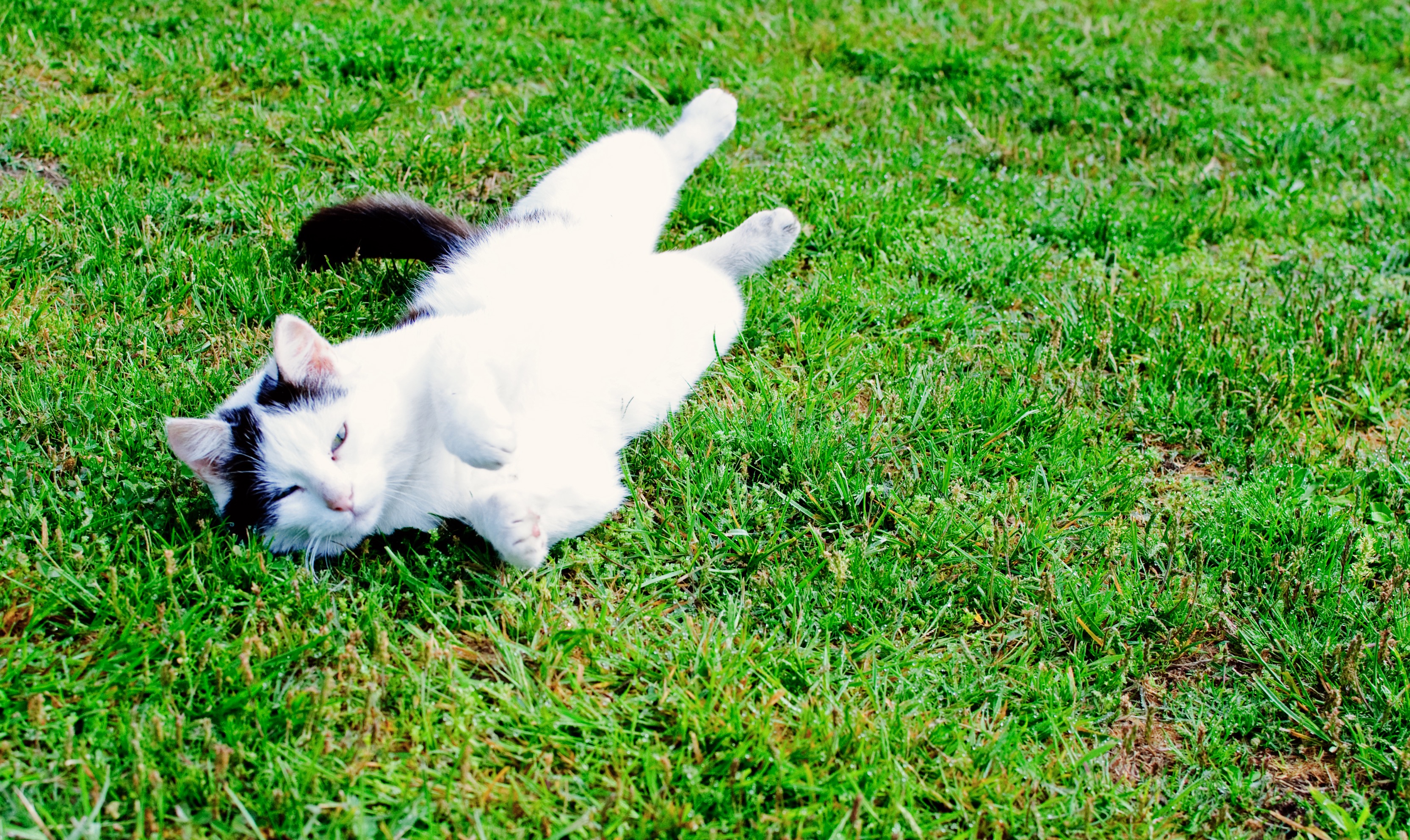
Yesterday Luc and I were standing on the lawn discussing the horses’ hooves, as you do. Hugo is always irrationally put out when Luc and I talk to each other outside (I’m not sure why), and doesn’t hesitate to let it be known. Yesterday, he showed his exasperation by sitting on my feet and boxing my legs with his paws. This, of course, provoked Java (because my legs belong to HER), and she torpedoed Hugo, threatening him with her tiny, bared teeth. Next it was Minou’s turn to be annoyed (manifestly, he is the only one allowed to attack Hugo), and he launched himself between the two dogs, intercepting and separating in a matter of seconds, like a particularly effective anti-ballistic missile. Which begs the question: is this normal, or is our cat a psychopath?I always love making this casserole in the spring. It’s satisfying, yet light and fresh. And making it takes my mind off my unstable animals.
Recipe for chicken printempier (serves 4)
- 1 tablespoon of olive oil
- 1 onion, sliced
- 4 chicken thighs
- 2 glasses of dry white wine
- 450ml chicken or vegetable stock
- 10 baby carrots (or 4 normal carrots ‘julienned’)
- 4 small leaks, rinsed and sliced
- 4 small turnips, peeled cut
- Sea salt and freshly ground black pepper to taste
- 1 bay leaf
- ½ teaspoon paprika
- ½ teaspoon fenugreek
- 1 courgette, cut into rounds
- 80g of peas (either shelled or frozen)
- Fresh mint, chopped to garnish
Preheat the oven to 180°C. Gently brown the onions in a casserole dish in the olive oil. Add the chicken and brown gently for a couple of minutes. Add the wine and stock and bring to a simmer. Add the carrots, leaks, turnips and seasoning. Cook for an hour in the preheated oven and then add the courgette and peas, making sure that there is still enough liquid. Cook for a further 20 minutes and add the fresh chopped mint just before serving. Delicious served with new potatoes.