-
Ceps in the country (and unhinged Frenchmen)
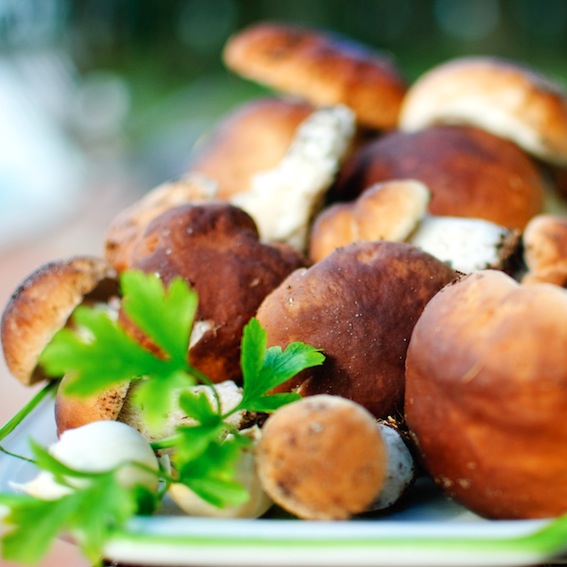
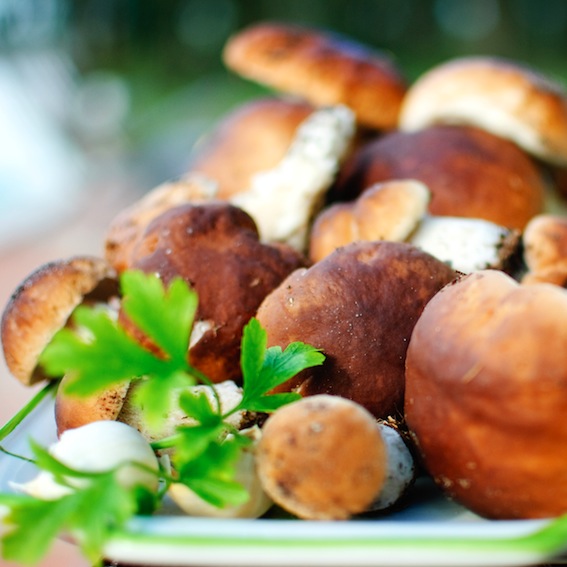
When it comes to mushrooms, the French become homicidal maniacs. Though only when it comes to mushrooms, of course 😉 My husband is a case in point. Last year, before he’d got ‘into’ mushrooms and ceps (also called king bolete or porcini) in particular, he announced that anyone mushrooming on our land was more than welcome to keep whatever they found. Our land was there for everyone – for the greater good, blah, blah, blah. Well not anymore. No siree.
The greater good pitch vanished the moment we discovered how best to cook and savour them. We now have tacky signs up everywhere saying, roughly translated, ‘Cep bugulars get out!’, ‘Steal our ceps at your own peril!’, ‘Beware! ferocious cep-guarding dog’… During The Season, he gets up at the crack ofmushroomdawn and skulks out into the half-light, a rifle over his shoulder. OK, I’m making the rifle bit up, but he definitely would if he owned one.
Mocking aside, ceps really are worth it; they have a deep, earthy, woody taste and are rich in vitamins A and C, iron, potassium and selenium. They can mostly be found in the early Autumn under mature trees such as spruce, pine, hemlock, birch and oak. Just don’t come looking for them on our land 😉

Ceps fried with garlic and parsley
Ingredients :
Fresh ceps
Olive oil
Butter
Garlic, chopped
Rock salt
Freshly ground black pepper
Fresh parsley, chopped
Any earth or sand clinging to the ceps should be brushed off gently with soft-bristle brush. Avoid rincing in water if possible. They should then be cut with a very sharp knife (to avoid bruising) into half centimetre slices. Heat the olive oil and butter in a frying pan – there should be enough oil to coat the bottom of the pan easily. Once the oil is hot (but not smoking), add the ceps. Cook for seven minutes on each side – the white flesh should become golden brown. Add the chopped garlic and parsley two minutes before the end of cooking.
In my opinion, the best way to eat ceps prepared in this way is on their own or perhaps with a plain omelette. They go nicely with green salad and some crusty French bread. -
Chilli con carne and itinerant horses
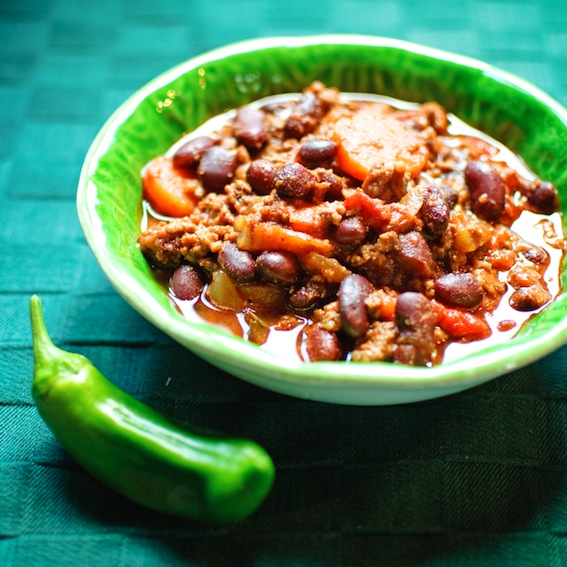
This is the sort of dish that is even better a day or two after it’s made, which is just as well really as I had no time to prepare lunch, having spent all morning chasing our Houdini horses. They escape more regularly than I like to admit – let’s just say that they are well-known by everyone within a 5 km radius and by the town ‘Mairie’.
Ingredients (serves 4)
250g dried red kidney beans (soaked overnight and boiled for 10 minutes)
500g minced beef
2 tablespoons of olive oil
2 medium onions, chopped
2 cloves of garlic, crushed
6 tomatoes, blanched and skinned
1 red bell pepper (cut into strips)
4 chilli peppers (sliced)
6 mushrooms, peeled and sliced
2 tablespoons of tomato purée
2 glasses of red wine
250ml beef stock
1 sprig of rosemary and 2 bay leaves
1 tablespoon Worcester sauce
1 square of 80% dark chocolate
Seasoning to taste : sea salt, black pepper, chilli powder
Preheat the oven to 150°C. Pour the olive oil into a medium-sized casserole dish and heat. Add the onions, garlic, mushrooms and mince and brown well, stirring around a bit. Once browned, add the bell pepper, the chilli peppers and the tomatoes and continue to cook until gently simmering. Add the tomato purée, the kidney beans, Worcester sauce, seasoning, stock, red wine and herbs and bring back to a simmer. Cook in the oven for about two hours, checking from time-to-time that there is enough liquid. Add the dark chocolate, stirring well to melt, just before serving.
May be served as a standalone dish, like soup, or with coleslaw and green salad. -
Cassoulet and mouthfuls of sand

My annual flirtation with vegetarianism will have lasted almost a month. Hugo, our labrador, is having a whale of a time ‘playing’ with pheasants at the moment. He waits until I’m in the saddle, then goes out in front to lift a pheasant as close to the horse’s nose as possible. This makes my horse spook flamboyantly (Iberian horses are total show-offs and exceedingly supple to boot) and I end up, more often than not, with my nose in the sand. Which brings me back to why I’ve surmised that hunting isn’t all bad; I’m anxious for them to hurry up and butcher a few of the pheasants near us, to give myself a fighting chance at staying in the saddle 😉
This cassoulet is, perhaps for some people, slightly unorthodox in that it has no breadcrumbs on top. In any case, it’s well worthy of a break from half-hearted vegetarianism and is the epitome of ‘real’ food.
Ingredients (serves 8)
1 large onion, sliced
1 red pepper
4 chilli peppers
1 tablespoon olive oil
8 mushrooms
4 medium-sized carrots, peeled and cut into large pieces
5 cloves of garlic, crushed
8 Toulouse sausages
300g salted pork breast
4 pieces of duck confit
2 sprigs of rosemary
2 glasses of dry white wine
5 medium tomatoes, blanched and skinned
500g white haricot beans (these should be soaked overnight if dry)
Seasoning to taste (seasalt, black pepper, Espelette pepper or paprika)
1 teaspoon juniper berries
Start by de-fatting the duck confit in a pan, heating and removing the fat gradually. Put the onions, garlic and olive oil into a large casserole dish and gently brown. Add the mushrooms, carrots, red pepper, chilli peppers and tomatoes and continue to brown on a low heat. Add the sausages, duck and pork and continue to cook for a couple of minutes. Add the white wine, juniper berries and rosemary and bring back to a simmer. Lastly, add the white beans and season well. You will need to add some water – probably about 500ml – enough to come about half the way up the casserole dish. Cook on a lowish heat (140°C) for about two and a half hours, checking from time-to-time that there is sufficient liquid.
This is a very rich dish and should just be served with a crisp green salad. -
Green beans with pesto and flashbacks to the ’70s
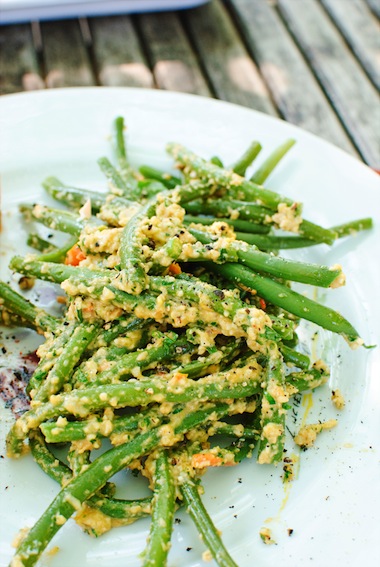
Apologies to those not familiar with the hysterical British comedy series ‘Fawlty Towers’, but everytime I make something with basil I think of Sybil Fawlty’s dulcit tones shouting; ‘BASIL! BASIL!’ and his comeback, which was more often than not something along the lines : ‘Coming my little piranha fish’.
Basil is high in vitamins and minerals in general and vitamins A and K and iron in particular. It also has anti-inflammatory and anti-bacterial properties.
Ingredients
Two handfuls of fresh basil
1 handful of pinenuts
1 handful of cashew nuts
8 cherry tomatoes
3 tablespoons of olive oil
2 tablespoons of freshly-grated parmesan cheese
Sea salt, pepper and paprika to taste
Blend all of the ingredients in a food processor to form a paste. Serve with either green beans or pasta. -
Fig and honey mousse (for when you’re so over fig jam)

We’re savouring the last of our figs in this delicate, fragrant mousse. My husband decided that 346 pots of jam was probably jam enough to last until next year ;-). Not a moment too soon if you ask me – I’ve been able to reclaim my kitchen.
Ingredients (serves 8)
1 cup greek yoghurt
3 cups pureed peeled figs
1 teaspoon finely grated lemon zest
1 teaspoon of grated ginger (optional)
1 tablespoon rum
1 tablespoon honey
1 cup chilled cream
Combine the yoghurt, figs, lemon zest, ginger, honey and rum and leave to chill.
Whip cream to until stiff and gently fold in with the chilled fig mixture.
Serve immediately for mousse OR spoon into a mold and freeze for frozen mousse. -
Chestnut celeriac soup and how to put your foot in it
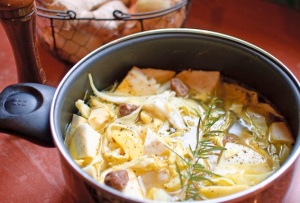
I’m a train wreck; my hands of full of spikes from over-zealously collecting sweet chestnuts without gloves and my foot is elevated, soaking in vinegar and at least twice its normal size from ‘antagonising’ a family of hornets that had taken up residence in my riding boot. If anyone has some good advice on treating the pain of wasp/bee/hornet stings please let me know 🙂
The chestnuts were worth the pain, as this soup will testify. The hornet sting brought nothing good, just some ardent cursing that surprised even me.
This soup is a lot of work if you use fresh chestnuts, so if you don’t relish the idea of being totally incapacitated, you could always use tinned. If you do use freshly-picked chestnuts, I recommend cooking them in their shells for about 45 minutes in salted boiling water with a couple of fig leaves (if you happen to have some to hand!). They will then need to be shelled, so try to nab someone nifty with a knife. I think if I’d tried to shell them myself today, I’d have ended up in emergency!
Ingredients (serves 10)
1 tablespoon olive oil
1 tablespoon butter
1 onion, chopped
4 garlic cloves, crushed
400g of pre-cooked chestnuts
1 celeriac
1 carrot
1 apple
2 litres of chicken stock
Sprig of rosemary
Seasoning (sea salt, freshly ground black pepper, curry powder…)
1/2 cup of cream
Fry the onions and garlic in the olive oil and melted butter until golden brown. Add the celeriac (peeled and cut into rougly 1cm cubes) and apple (also peeled and chopped) and continue to lightly brown. Add the drained chestnuts, the sprig of rosemary and the chicken stock and bring to the boil. Add the seasoning to taste and cook for about 30 minutes. Add the cream and purée until smooth. -
Chocolate ginger cake (and canine neurosis)
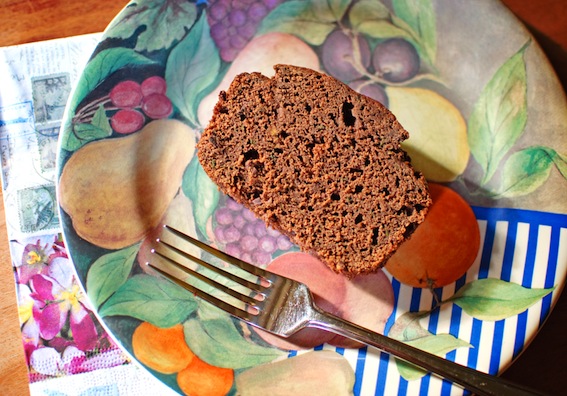
With the hunting season in full-swing, I’m having to deal with a labrador hovering on the brink of nervous breakdown; he doesn’t like the sound of guns (despite the fact that, technically at least, he’s a ‘gun dog’). It’s a touch and go situation and I’m still sticking to my vegetarian resolution in solidarity, so this cake contains no meat whatsoever 😉 Just a word of warning: it does contain grated courgettes so if, like me, you live with men and children with entrenched prejudices about how and when vegetables should – or, more to the point, should not – be consumed, my advice is to keep the recipe under wraps. It’s delicious and that’s all they need to know. As cakes go, this one is also exceptionally healthy: buckwheat flour is gluten-free and full of fibre, amino acids, vitamins and minerals, courgettes speak for themselves and organic cocoa powder is rich in iron.
Ingredients (roughly 10 slices)
1 cup buckwheat flour ½ cup cocoa powder
1 teaspoon baking powder
1 pinch of bicarbonate of soda
¼ teaspoon sea salt (fine grain)
1 cup organic cane sugar ½ cup cocoa nibs (optional)
¼ cup organic coconut oil
1 egg, beaten
1 cup of almond or oat milk (or regular milk if you prefer)
3 cups’ grated courgettes
1 teaspoon of fresh, grated ginger
Preheat the oven to 160°C. Combine the dry ingredients (flour, cocoa powder, sugar, cocoa nibs, salt , bicarbonate of soda and baking powder) in a bowl and mix well. In another bowl, combine the ‘wet’ ingredients (eggs, milk, grated courgettes, ginger and melted coconut oil) and mix well. Combine both sets of ingredients, folding the mixture to obtain a smooth batter. Pour the batter into a loaf tin (preferably pyrex) roughly 25cm long by 6cm deep. Cook for about 40 minutes, or until a fork comes out clean. -
Three-bean vegetarian chilli for sensitive souls

Every year at about this time I become a born-again (and again, and again) vegetarian. My ideology coincides with the start of the French hunting season and usually lasts two or three weeks; Fickle is my middle name!
This vegetarian chilli is so good that it actually makes you wonder why you would ever bother putting meat in it at all. From a nutrional standpoint, it’s certainly not lacking. Beans in general are high in fiber, protein, antioxidants, vitamins and minerals. Black beans have plenty of folates, kidney beans are a rich source of manganese and vitamin K and white beans are full of molybdenum. Finally, beans are low on the glycaemic indew, which makes them both healthy and diet-friendly.
Ingredients (serves 6)
1 onion, chopped
3 cloves of garlic, crushed
1 red pepper, cut into strips
2 chilli peppers, cut into strips
1 large carrot, peeled and cut
1 courgette, sliced
5 mushrooms, peeled and sliced
3 tablespoons’ olive oil
110g dry black beans (you can also use pre-cooked but make sure to drain and rinse well)
110g dry white beans (you can also use pre-cooked but make sure to drain and rinse well)
110g dry kidney beans (you can also use pre-cooked but make sure to drain and rinse well)
1 tin of tomatoes (400g)
250ml vegetable stock
1 glass of red wine
2 bay leaves
Sea salt, pepper, paprika, chilli powder
Pre-soak and cook the beans if using the uncooked variety.
Brown the onions and garlic in a medium-size casserole until golden. Add the mushrooms, courgettes, carrots, red pepper and chilli pepper and continue to brown. After about five minutes, add the red wine and simmer gently for a couple of minutes. Then add the tomatoes, beans, stock and bay leaves. Bring back to a gentle simmer and add the seasoning. Stir well and cook in a medium oven (about 175°C) for an hour. You can cook for longer than an hour, but will probably need to add more fluid. Check from time to time anyway, as the beans soak up quite a lot and may need to be rehydrated. This is also good cooked in advance and reheated.
Delicious served with brown basmati rice and a crisp green salad. -
Low-GI chocolate mousse with cocoa nibs

I needed a delicious dessert to make for a lunch party today and, as our kitchen has apparently recently been transformed from family kitchen to medium-scale fig jam processing plant (see previous post!), it had to be something quick and easy. My husband and I married for better or for worse, but absolutely NOT to be cooking in the kitchen at the same time.
This mousse is really divine. It’s rich but simple and not too sweet. The recipe is a slightly adapted (I’m incapable of leaving a recipe intact) Montignac recipe, so its GI rating is good (ie low!) because it contains absolutely no added sugar. The rum I used is very luxurious and deliciously fragrant but I’m sure any rum will do.
Dark chocolate is full of antioxidants. Cocoa is a good source of vitamins and minerals including magnesium, calcium, iron, sulphur and manganese. It also contains B vitamins. Cocoa nibs have all the same benefits as chocolate in a purer, more powerful form.
Ingredients (serves 4)
200g dark chocolate (minimum 70% cocoa)
4 eggs
1/2 glass of rum (5 cl)
2 tablespoons cocoa nibs
pinch of salt
Break the chocolate into pieces and melt in a casserole with the rum. Separate the eggs and beat the whites with a pinch of salt until stiff. Once the chocolate has melted, add the beaten egg yolks to the mixture and stir rapidly for about a minute. Stir in the cocoa nibs and then delicately add the mixture to the egg whites, stiring well to obtain a smooth, homogenous texture. Transfer into four ramekins or glasses. Chill for at least five hours before serving. -
Fig jam and irritating scrubbers

My passion for figs is similar to my passion for tomatoes; it starts out all guns blazing, only to die a sudden death after the second consecutive week of thrice-daily consumption. Figs are pure nectar, either eaten straight from the tree still warm from the sun, in a salad with proscuitto or Bayonne ham, in Greek yoghurt with almonds, or with ice cream and hot honey sauce…
Once your two weeks are up and you would rather gnaw your own arm off than eat another fresh fig, you can make jam. This jam is reasonably healthy because it isn’t too sweet and the cinnamon regulates your insulin reaction to the sugar there is. Figs are a great source of minerals, vitamins and antioxidants.
A few words of warning: the first is that jam sticks to pans if left unattended. My husband made an enormous pot-full, left it to simmer and then went to mend a fence (as you do!). Consequently, not only was I exposed to some very rude words, but also the unbearably grating sound of metal scrubbing metal for most of the evening. The second is to make sure to remove the fruit-picking ladder from underneath the tree every evening. Hens may not be very bright, but if the reward is delicious enough, they will find a way to climb a stepladder…
Ingredients
1 kilo of fresh figs
500g cane sugar
30g fresh grated ginger
2 tsp cinnamon
half a lemon
200ml water
Cut the figs into quarters and add to the water in a large saucepan (preferably non-stick!). Cut the (washed) lemon into small pieces and add to the saucepan. Finally add the sugar, ginger and the cinnamon and gently bring to a simmer. Stir frequently and leave to simmer for about an hour. Transfer into sterilised jam jars.